
Marketing
Business
The Cameroon Brand Pantheon: A 2023 Snapshot and Call for Update
Poise's curated ranking of Cameroon's twenty most culturally resonant brands—from Total and MTN to Hysacam and Afriland—captures how brands function as social mirrors, embodying national character, aspiration, frustration, and resilience. The piece invites readers to nominate contenders for a 2025 refresh, treating brand ecology as a living archive of collective values.
The Machinery Behind Celebrity Betting Spectacle
When Francis Ngannou appears to stake millions on a Cameroon match, the post reveals this is not personal gambling but contractual brand marketing. Celebrity betting promotions operate through promotional credit allocations embedded in endorsement deals, creating the illusion of personal financial risk where none exists.
The Influencer Tax: Why Most Businesses Should Build Their Own
The writer argues that influencer marketing functions as a largely unavoidable cost for businesses entering new markets or channels, but for small enterprises in Cameroon selling low-margin goods, the return rarely justifies the expense. Rather than paying established influencers, most small businesses should either create their own content or use influencers as distribution partners on native terms.
The Jesus Girl Case: A Lesson in Due Diligence for Influencers and Investors
A TikToker known as Jesus Girl faced police custody over allegations of promoting a fraudulent financial services company that defrauded someone of 10 million XAF. The incident prompts a practical reminder about the importance of basic verification steps before endorsing or investing in any financial offer.

The Price of Invisible Work: On Valuing Creative Services in Cameroon
A reflection on the persistent difficulty of pricing creative and content work in Cameroon, where efficiency is often punished and the boundary between time spent and value delivered remains fundamentally misunderstood. The writer argues that creative pricing should rest on the client's actual benefit and the creator's opportunity cost—not on hours logged or speed of delivery.
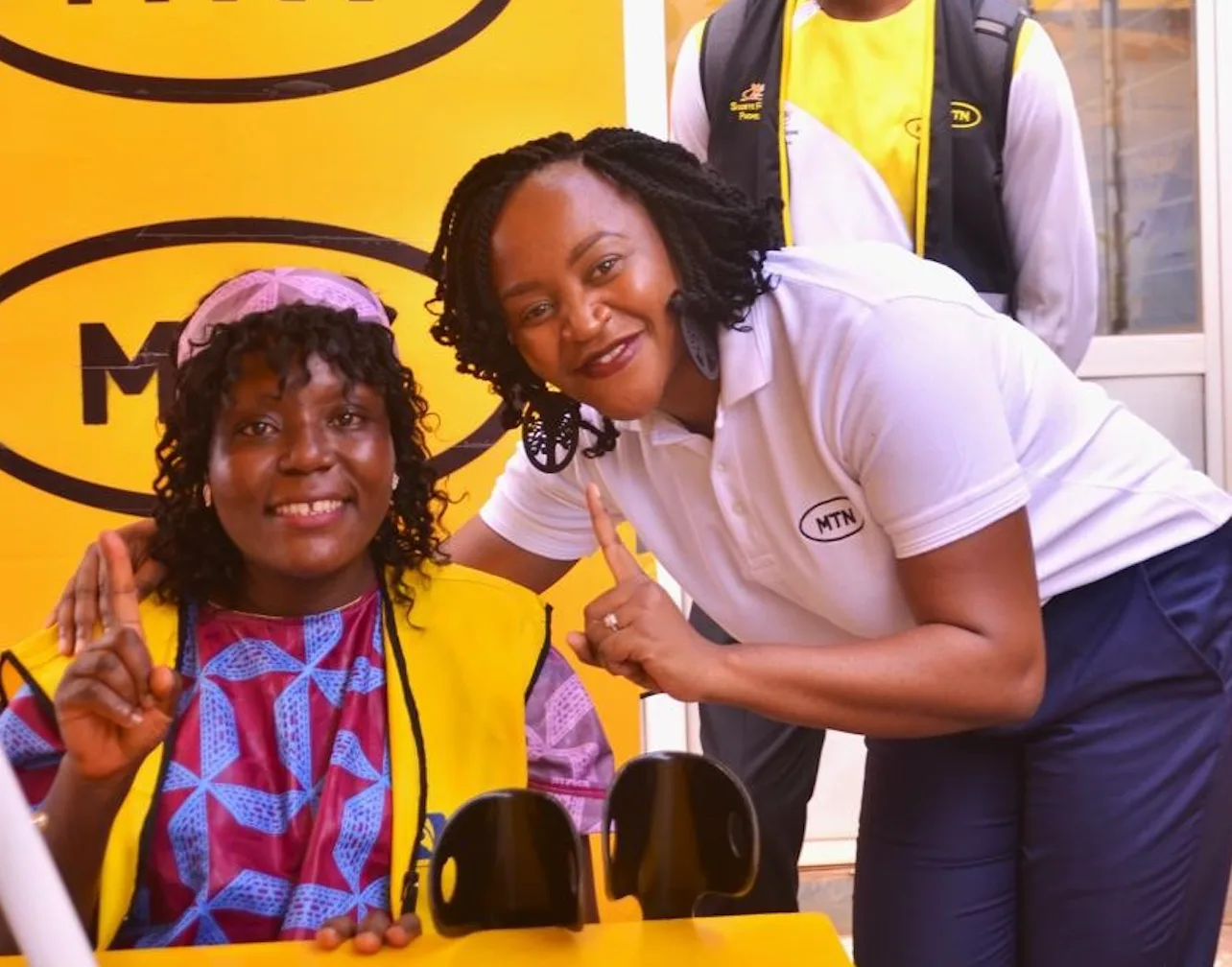
When Good Intentions Backfire: MTN's Data Campaign and the Cost of Hastily Executed Policy
The writer examines MTN Cameroon's customer compensation campaign—offering free data and credit to address network service failures—and shows how the initiative fell short despite good intentions. The failure stemmed not from the gesture itself but from inadequate planning: all customers received gifts simultaneously, creating network congestion; unequal distribution (data versus credit) created perceptions of unfairness; and no staggered approach or clear communication existed to manage expectations.
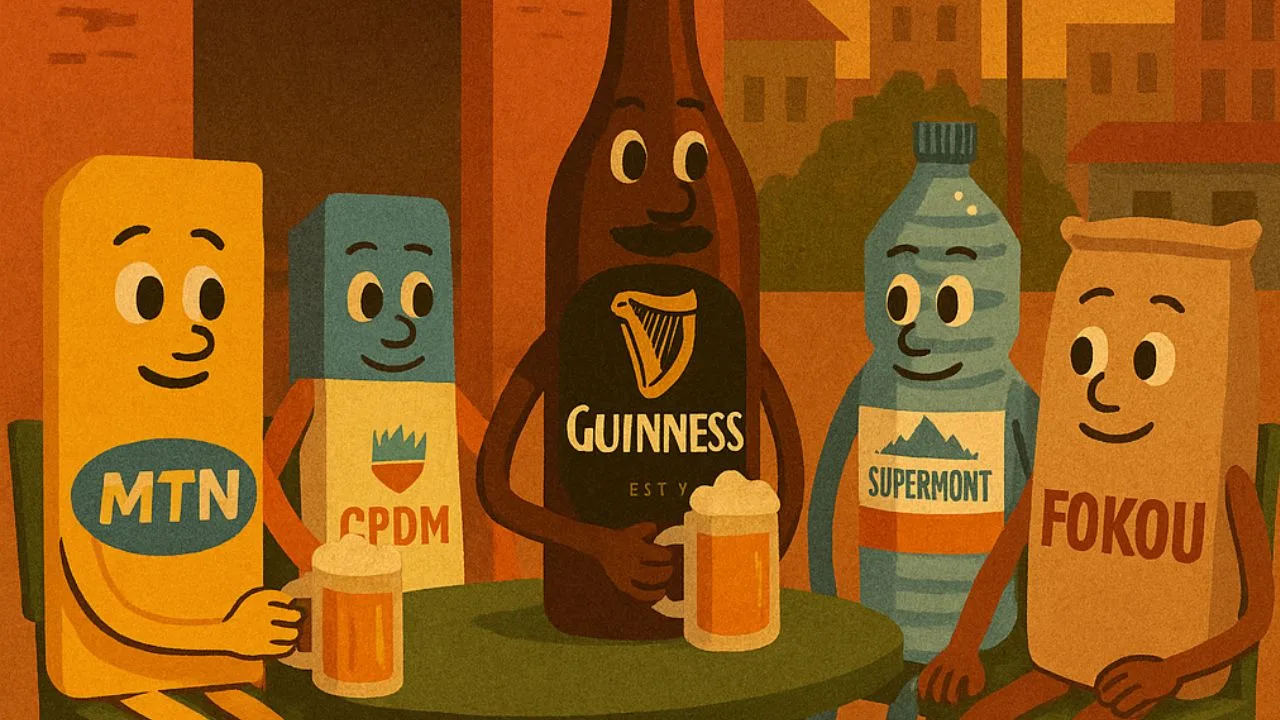
The Twenty Brands That Shape Cameroon: A Social Reading
This essay catalogues twenty major Cameroonian brands—from Total and MTN to Guinness, Hysacam, and Afriland—as mirrors of national character, economic anxiety, and resilience. Each brand carries not just commercial weight but cultural meaning: the way Cameroonians relate to authority, aspiration, everyday hardship, and quiet entrepreneurial pride.
Before You Pay for Digital Marketing Workshops
The writer argues that digital marketing certificates from short-term workshops offer false credentiality and rarely translate to employment or business results. True competence in the field requires sustained practice, demonstrated work, and reputation-building—not credentials—and workshops serve best as orientation, not qualifications.
Cultural Distress and the Machinery of Consumerism
The writer distinguishes between genuine hardship and manufactured cultural distress—the invented shame and anxiety that marketing and politics deliberately cultivate to drive consumption. This distress, rooted in social comparison and fear of inadequacy, is deliberately amplified because selling easy avoidance of it is profitable, yet the cycle never resolves.

The Arithmetic of Trust: On Auntie Felicia and the Economics of Influence
A marketer examines the rapid ascent of a major Cameroonian comedy influencer and the pitfall of accepting too many brand deals at once. The piece argues that oversaturation threatens the trust relationship that makes influencers valuable in the first place, and proposes a more deliberate content strategy.
Pressure: Is Jovi the Last of a Dying Breed?
The writer traces the evolution of Cameroonian hip-hop from the early 2000s through the early 2010s, examining how a generation shaped by Western rap and R&B channels created space for homegrown artists. The piece asks whether Jovi—an emergent figure—represents the culmination of that lineage or its endpoint as the industry fragmented under technological and economic pressure.
Brand Ambassador Deals in Cameroon: The Adidas Paradigm and Modern Influence
This piece traces the origins of brand ambassador strategy through Run-DMC's iconic partnership with Adidas in the 1980s, then applies that historical model to understanding contemporary endorsement deals in Cameroon. The writer argues that authentic lifestyle alignment—not just paid promotion—creates market movement and cultural legitimacy.
Monetizing a Fanbase: Album Sales, Proof, and the Cameroon Music Industry
The writer questions inflated sales claims around a major local album release and uses it as a springboard to examine what transparency in music earnings might teach emerging artists. The piece argues that unverified figures obscure the real economics of music in Cameroon and that artist credibility rests on talent, self-directed marketing, and authentic fan engagement rather than assembled teams.

When Brands Become Words: Genericization and Market Power in Cameroon
The writer examines genericization—the process by which brand names become generic terms for product categories—through the lens of Cameroon's bottled water market, particularly the rise of Supermont at the expense of the once-dominant Tangui. The piece argues that while brand genericization can signal market strength, it also carries legal and competitive risks that savvy companies must carefully manage.
The Case for Creative Hubs in Cameroon
The writer examines the Hype House model—a physical creative collective in Los Angeles where young content creators live and collaborate—and argues that Cameroon's creative industries would benefit from similar intentional spaces for cross-disciplinary collaboration beyond music.
Strategy in the Content Age: When the Music Business Becomes About More Than Noise
The writer argues that while social media has made music into a content business, most Cameroonian artists create noise rather than strategy. True content work—exemplified by Beyoncé's constellation of documentaries, tours, and collaborative projects around a single album—requires intentional positioning and coherent narrative, not merely viral moments.
Twenty-Two Uncomfortable Truths About Life and Business (Part 2)
A collection of aphoristic observations on business, relationships, and personal development, emphasizing emotional logic over rational calculation, the primacy of service and value creation, and the discipline required to sustain success. The writer argues that competence, vulnerability, curiosity, and strategic silence matter more than intelligence, credentials, or clever positioning.
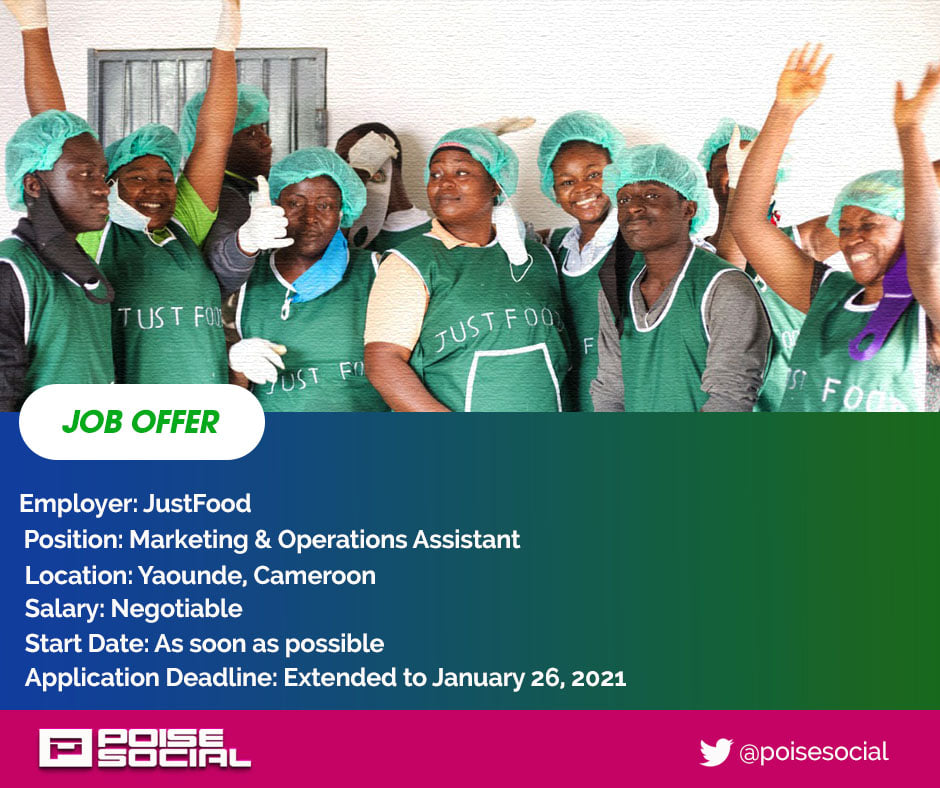
Job Opening: Marketing & Operations Assistant at Just Food, Yaounde
Poise shared a job advertisement for a Marketing & Operations Assistant role at Just Food, a Yaounde-based food processing company specializing in convenient, healthy ready-to-cook traditional African meals. The position, open in January 2021, required a candidate with marketing or business credentials, bilingual proficiency in English and French, and a broad range of operational, customer-facing, and administrative responsibilities.
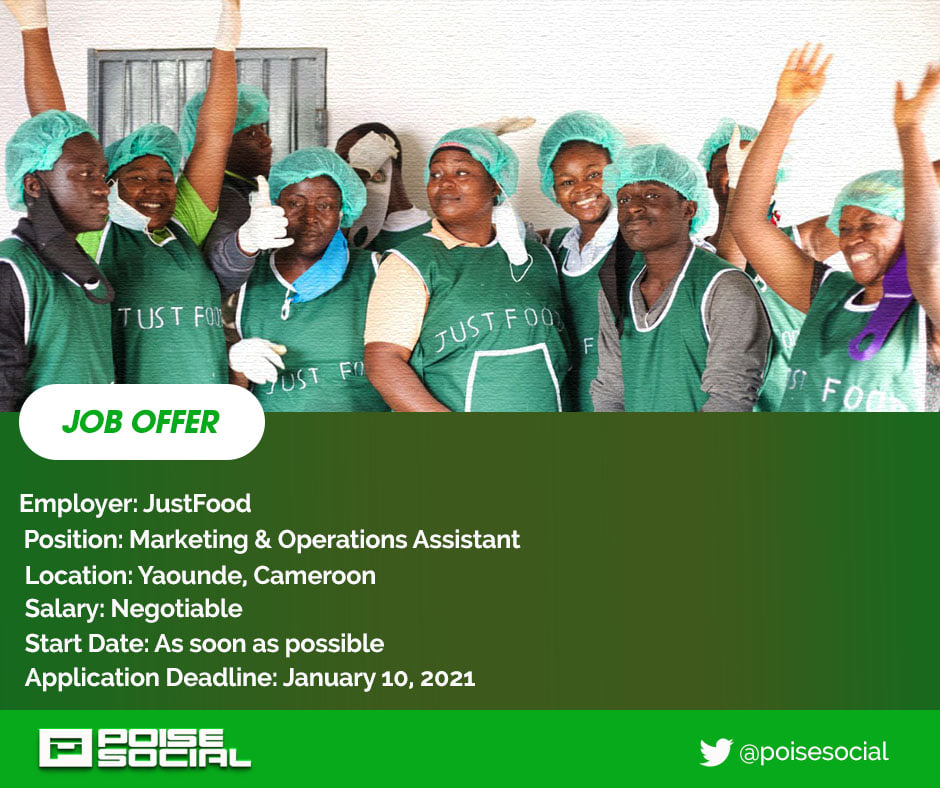
Job Posting: Marketing & Operations Assistant at Just Food
Poise shared a recruitment notice for a Marketing & Operations Assistant role at Just Food, a Yaounde-based food processing company transforming traditional African dishes into convenient, health-focused ready-to-cook products. The position, posted in January 2021, required marketing and business credentials, bilingual fluency, and a broad range of operational responsibilities spanning customer engagement, logistics, and administrative work.
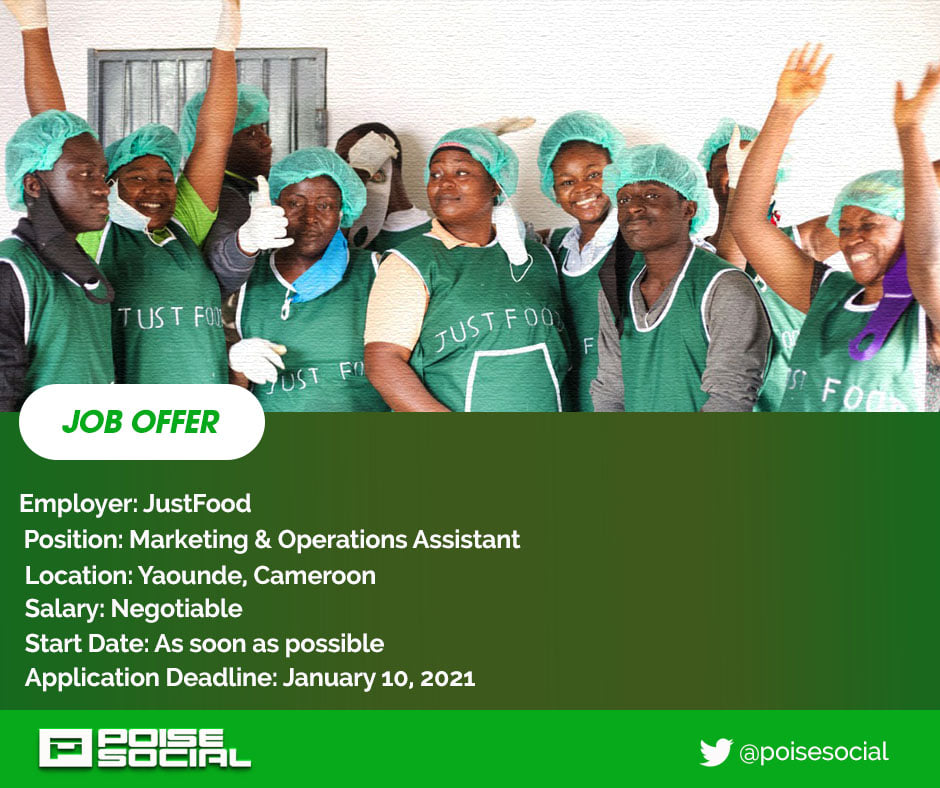
Marketing & Operations Assistant at Just Food: A Portrait of Cameroon's Food-Tech Moment
Poise shared a job posting from Just Food, a Yaounde-based food processing company seeking a marketing and operations assistant. The role encompassed customer engagement, logistics, production oversight, and administrative work across both local and international markets—a snapshot of how small Cameroonian food enterprises were beginning to professionalize and scale in the early 2020s.

Knowledge As Currency: Building Authority Through Answering Questions
The writer argues that professionals across Cameroon—lawyers, accountants, designers, mechanics, and vendors—can build lasting brand authority and generate income by producing content that answers their customers' real, everyday questions rather than simply promoting products or services. This shift from direct sales to indirect monetization through expertise creates trust, positions them as authorities, and opens multiple revenue streams.

The Brand Ambassador Bubble in Cameroon
This essay critiques the hollowing-out of 'brand ambassador' as a concept in Cameroon's creative industries, where the term has become a social-media-amplified status marker divorced from strategic partnership, genuine consumer correlation, or mutual value exchange. The writer traces how bloggers, music industry figures, and young aspirants have glamorized brand deals without understanding or communicating their actual nature.
Meet Ritha Nengi: Beauty Entrepreneur
A profile of Ritha Kelly Nengi, a Cameroonian beauty entrepreneur who founded Glowrays Cosmetics after recognizing an underserved market for skincare solutions tailored to Black skin. Drawing on formal training in cosmetology and skincare formulation, she developed products addressing specific concerns—like hyperpigmentation on knees, elbows, and knuckles—that dominate Black women's skincare needs.

Diaspora Urban Acts: Does the Formula Work?
The writer examines the viability of Cameroonian musicians promoting themselves to a domestic audience while based abroad, questioning whether geographic distance from home—even in diaspora hotspots like the US or UK—ultimately undermines artistic and commercial success. Through cases like Blanche Bailly and Poker, the piece argues that proximity to Cameroon's creative ecosystem and home-crowd support offer decisive advantages that diaspora-based promotion strategies cannot replicate.
The Music Business Has Become a Content Business
The digital transformation of music consumption—from streaming to social media—has fundamentally altered how the industry operates. Musicians can no longer rely solely on releasing albums and touring; they must now function as content creators, building anticipation and audience loyalty through consistent output across platforms.
Five Sales Lessons from Building a Natural Hair Business
A Cameroonian beauty entrepreneur reflects on her journey from self-described reluctant seller to confident founder of Molonga Naturals, sharing five core principles: target your niche, understand your audience's language, solve problems before pitching products, build trust through expertise, and maintain honesty in recommendations.
Cameroon's Artists and Web Analytics: Building Beyond Social Media
A practitioner in Cameroonian digital marketing observes that local musicians, bloggers, and creatives rely almost entirely on social media metrics while neglecting their own websites and the analytics tools that could reveal their actual reach and audience behaviour. The piece argues that understanding web data—not vanity follower counts—is essential for artists to attract industry partners and build sustainable careers.
Building a Personal Brand as a Female Entrepreneur
Personal branding is essential for women entrepreneurs navigating gender-biased career obstacles. By clearly defining and consistently projecting your strengths, values, and unique qualities—especially through digital channels—you create visibility and open professional opportunities.
Five Lessons in Selling: A Natural Hair Entrepreneur's Reckoning
A Cameroonian beauty entrepreneur reflects on her journey building Molonga Naturals, distilling five hard-won insights about sales: stop targeting everyone, speak your audience's language, solve problems before selling products, establish expertise through education, and prioritize honesty over revenue. What emerges is not a sales manual but a philosophy of earned trust.
Community as Capital: The Sustainable Path for Cameroon's Creative Economy
The writer examines how artists and creators in Cameroon can build sustainable income by cultivating devoted niche communities rather than chasing mass audiences. Using the PAKGNE group's successful premiere of 'Shenanigans' in Douala as proof of concept, the piece argues that a small, engaged fanbase willing to pay for quality work generates more reliable revenue than viral reach.
The Discovery Show: Rethinking the Economics of Live Performance
A reflective account of a new event platform that redistributes risk and responsibility between artists and organizers, asking whether shifting artists toward independent ticket sales and direct audience engagement can reshape how live music works in Cameroon.
The Influencer Gap: Why Digital Marketing Struggles in Cameroon
The writer examines why influencer marketing has limited efficacy in Cameroon, distinguishing between genuine influence—built on consistent value creation over time—and mere follower counts. Using Marques Brownlee's tech YouTube empire as a blueprint, the piece argues that Cameroon lacks both the digital infrastructure and the sustained, value-driven creators necessary for influencer marketing to work at scale.

Skills, Assets, and the Future of Influence in Cameroon
The writer argues that Cameroonian influencers cannot rely on direct brand sponsorships—a model slow to arrive in the local market—and must instead create economic value through strategic, project-based collaborations that combine creative vision, production capacity, and marketing reach. Drawing on examples from fashion, the piece proposes a practical blueprint for turning social influence into sustainable income.
Skills and Assets: How Influencers Can Build Income Through Collaboration
The writer argues that Cameroonian influencers cannot rely on brand sponsorships from major corporations, which remain slow to adopt influencer marketing. Instead, they propose a model of project-based creative and financial collaboration between influencers and established brands—pooling skills, capital, and reach to create and market products together.
When a Million Followers Is Not an Achievement: Influencer Marketing in Cameroon
The writer examines the gap between follower counts and actual commercial viability, using the case of Arii—a major influencer who failed to move product despite two million followers—to argue that raw audience size is meaningless without a coherent advertising strategy and demographic alignment.

Numbers Are Not Everything: On Influence, Strategy, and Social Media in Cameroon
The writer argues that follower count alone does not constitute influence, and that successful marketing on social media requires deliberate strategy, varied content, and sustained promotion—not mere posting to a large audience. Using examples from Cameroonian and international contexts, the piece examines why many with large followings fail to convert attention into action or sales.
Consistency Alone Is No Longer Enough: Why Attention Has Become the Real Currency
This essay argues that the widely held belief that consistent content creation is the path to online success is now outdated, particularly on mature social media platforms. Instead, the writer contends that what matters now is the ability to capture and sustain audience attention through narrative intrigue, surprise, and strategic positioning—not volume.
Sandra Borno and Molonga Naturals: A Portrait of Passion Over Hustle
Poise profiles Sandra Borno, founder of Molonga Naturals, a natural hair-care brand built on deep product knowledge, ingredient transparency, and freely shared expertise. The piece celebrates her as an exemplar of entrepreneurship driven by genuine passion rather than commercial ambition, and situates her work within the broader cultural movement of Black women reclaiming and celebrating natural hair.
The Valuation Problem: Pricing Creative Work in Cameroon
The writer reflects on the persistent difficulty of pricing creative services in Cameroon, tracing the problem to asymmetrical understanding between clients and providers. Drawing on personal experience with undercompensated projects and negotiations gone wrong, the piece argues that creative value should be measured by impact and opportunity cost, not hours spent.
The Magasco-Niska Scheduling Clash: A Case Study in Market Perception vs. Market Reality
When Cameroon-based afropop artist Magasco's December concert was scheduled just one day before French rapper Niska's show at the same venue, many assumed deliberate sabotage by the organizing companies. The writer argues instead that in a city of 2.5 million people, both shows can succeed—and that the real issue is local artists' perceived market value compared to foreign performers.
The Art of Presenting Your Work: Why Self-Selling Matters
Poise reflects on a community exercise asking followers to showcase their side hustles, and discovers that most struggled to present themselves effectively—poor presentation, missing contact details, lack of genuine voice. The piece examines why this matters: the opportunity cost of not taking one's own work seriously, and how presentation itself is part of the product.
On Authenticity and Cultural Mirrors: The Adora Palace Advertisement as a Case Study
Poise examines a viral hotel advertisement from Yaoundé that drew laughs across Francophone Africa by depicting three archetypal figures of Cameroonian urban life—the bushfaller, the young woman of the neighbourhood, and the street-corner philosopher. The writer argues that its power lies in its unadorned authenticity: it simply looked around and made art from everyday reality.
The Show by Orange: Marketing Ambition and the Concert Experience Gap in Cameroon
Orange Cameroon's event-based marketing push, exemplified by "The Show," marks a strategic shift in how the telecom competes with MTN. Yet the piece uses the concert itself as a lens to examine a broader problem: Cameroon's event infrastructure remains hampered by poor technical execution, inadequate professionals, and decision-makers who prioritize politics over craft.
KamerLyrics: A Young Entrepreneur's Gift to Cameroonian Music
The writer celebrates KamerLyrics, a mobile app created by Minette Lontsie that makes Cameroonian song lyrics accessible in one place. The app integrates YouTube playback, allows user contributions, and addresses a long-standing gap in how fans engage with local music.
The Art of Positioning: Stanley, Puma, and the Logic of Strategic Visibility
The writer analyzes Stanley's apparent strategic placement of the Puma logo throughout his music video for 'Elle est la,' reading it as a deliberate bid for brand attention ahead of Cameroon's hosting of the 2019 African Nations Cup. The piece situates this within a global pattern of influencer marketing, where artists cultivate visibility with brands through consistent, authentic association before formal endorsement deals materialize.
Orange Cameroon and the BDMA Gift: When Sponsorship Becomes Performance
A winner of the BDMA (a digital media award) examines what the lead sponsor, Orange Cameroon, actually delivered in its gift package to laureates, and finds it strategically misguided—branded merchandise that serves the corporation's visibility far more than the creators' work. The piece uses this concrete disappointment to probe a wider question: what does meaningful sponsorship of excellence in Cameroon actually look like?