
I introduced this topic with reference to the hype Daphne received after her IG account clocked one million followers. I don’t think I would have felt the need to emphasize that one million followers is not an achievement if most people were not raving about it like it comes close to the 4 trophies she took home from the last edition of the Canal D’or. Some people came in the comments section to defend Daphne which was ironic because I didn’t actually take a jab at Daphne. I rather had a few punches for those who thought it an event enough to send her congratulatory messages.
The simple point I was trying to make is “Numbers are not everything.” Daphne has had some work done on her IG account but the last time I was there to study the the numbers, I realized she was averaging about 35,000 likes on each post and when she crossed the 50,000 mark, her body was doing the bidding. Good? Bad? Not either one of them necessarily.
People follow you on social media for various reason and a huge following does not necessarily translate to influence. Some people might have followed you because of one viral post you had whereas they actually do not care about what other products your are trying to sell to them. Influence is actually being able to move your followers to take a particular action. I’m not going to sit here and believe that Daphne, despite her musical success, is not thinking about other revenue streams. Surely her 1 million IG followers is sitting in the strengths quadrant of her SWOT analysis table, but to what end? If Daphne was to put out some merchandise today, it will be a good way for her to test her actual influence.
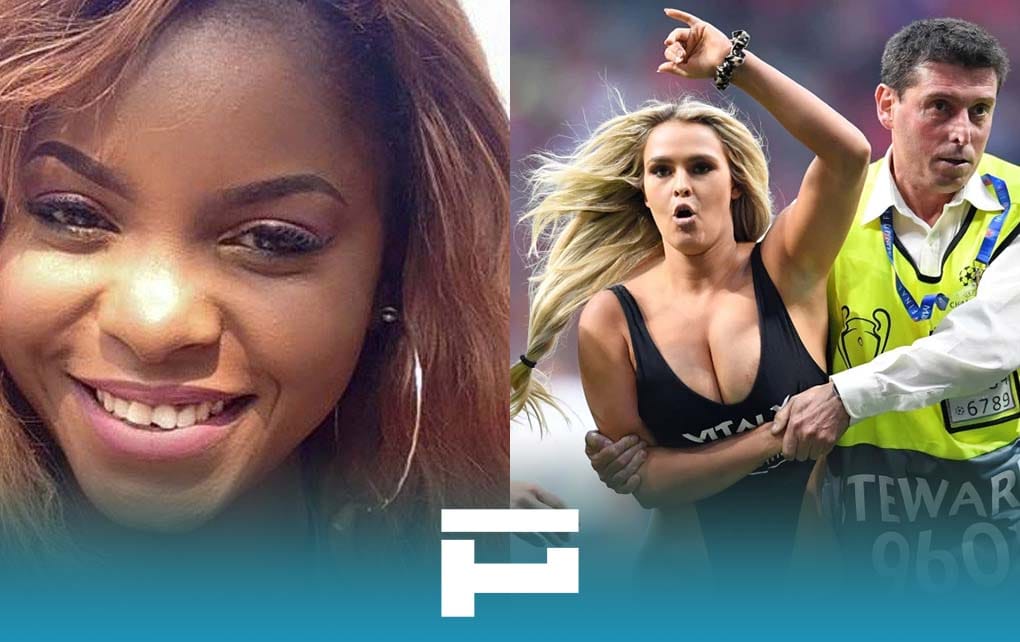
During the last champions league finals game between Liverpool and Tottenham, a streaker, Kinsey Wolanski ran into the pitch in a swimsuit. 12 hours later, her instagram following jumped from 260,000 to more than a million. Do you think Kinsey can make people buy a particular brand of swimsuits today just by posing with one?
Any-Ha!
The point I am trying to make is that no matter how many followers you have on social media, you still have to push, advertise, and promote your product like you would do any new product or like you would do if you had just 100 followers. Your followers have not signed up to everything you do. All you have is their attention but you still have to sell to them. In the last article, I mentioned IG influencer Arii and how she was unable to sell more than 36 products to seal her partnership deal. What happened is she just posted the product about twice on her page, she did not pay for any promotion, nor was there any visible marketing strategy in place to get people to buy the product. You can’t just assume that because you average 40 thousand likes a post, all you have to do is post and you will get the sales figures you want.
I remember when planete was about to release their bigger bottles of soda. By the way, this is one company that is aggressive with the marketing. Even when they have ventured into content marketing, they have been great. I don’t know why they do not invest more in that. Anyway, so before the launch of the 1.5L bottle for 500FCFA, they had billboards that simple read “Bigger is Better.” Those billboards carried no other information that alluded to the fact that it was a Planete ad. Those stayed up for about a month and were later replaced with Bigger is Better but now with the revelation of the new product size for the same price. That is a simple example of a company that is applying an advertising plan at the brick and mortar level - phasing out a product. That same approach applied online would most likely bolster product awareness. Now add other types of content to the package and you can drive sales.
The advantage with social media is that you can develop your marketing strategy and tweak it along the way based on the reaction you are getting. Some people put up one piece of content about the product then sponsor it for one month. I see that a lot with music. People just throw some advertising dollars at the youtube link and leave FB to figure out the rest and it never works. Nigerian artist Ric Hassani did a lot of that sponsoring and forgetting type of marketing. He got the views but never built any strong fanbase that will show up for him.
Basically, you have to have an advertising plan. You have to create multiple types of content around your main product at different stages of your market penetration. You have to see what is working and double down on that while making changes to what is not working (again, a luxury only available with online content marketing).
I know you are going to say “but if I have many followers, brands will pay me to wear their products and tag them.” Well, probably if you are in the USA but like I said in the previous article and the reason for me writing this article in the first place is -our industry is not ripe for brand endorsements; reason why most influencers end up creating their own brands to sell.
I am also writing here to help influencers when they work with other brands. I have seen cases where people want to accuse an influencer for taking money and not doing anything for the brand. This is common between artists and bloggers. A blogger receives money, writes one article, sponsors it on FB and both parties sit and wonder why ‘nothing no still happen.’ Artists need to understand that bloggers can’t do much for them without varied content. Thats why Blanche Bailly drops the songs then pumps the breasts. Thats why artists need to create more content around their brand or product they are trying too push.
I remember when I took on the task of marketing the COCOWOLS international fashion festival. I opted that we stick to online because we were not able to afford TV, radio, and billboards. MediaPlus gave us some free publicity space but it was still expensive for us to use. We had to print the billboards to go on there. Every piece of content that went out on Poise that month carried some sort of reminder about the event. I profiled each of the sponsors and partners and attached information about the event to the posts. The sponsors shared to their own platforms. I did not reach my sales targets but the awareness clearly happened. Time constraints and limited manpower also made it difficult for me produce all the content I wanted to produce towards marketing the event. I was still happy with what I was able to achieve in the limited time I had but it could have been better. The fact is, there was an advertisement plan.
Bon!
I was going to add to this article my ideas on how you can become a earning influencer but it is getting too long so let us leave that for part 3.
Tino Foy