

If you are in the business of public contracts or are interested in starting a business in Cameroon, you may want to know the government’s development strategy so you can identify sectors with significant government investment or subsidies and tax breaks. The following are the nine key sectors that make up the pillars for the structural transformation of Cameroon’s economy.
Energy
Cameroon’s goal is to produce abundant energy to improve the living conditions of its people, meet its industrialization needs, and become an energy-exporting country. To this end, three guidelines have been selected:
Develop the significant national hydroelectric potential
Develop alternative energies to meet specific needs better, such as cooking food, transport (particularly urban transport), urban electrification, manufacturing industries, etc.
Strengthen and optimize the use of biomass.
Agribusiness
Cameroon’s ambition for the period 2020-2030 is to increase the quantity and quality of the production of agricultural products to ensure food self-sufficiency, supply the growing demand of national agro-industries for agricultural raw materials, and conquer international markets, especially those of the ECCAS and ECOWAS subregions.
Priority sectors of agro-industrial development will be exploited, notably: cotton, cocoa, coffee, palm oil, sugar, rubber, rice, maize, banana-plantain, fish, milk, and meat. They will come under specific short- and long-term development plans to increase their production, strengthen their competitiveness, and develop downstream value chains, thanks especially to the implantation of processing industries.
Digital Technology
The objectives in this sector are to:
Reconfigure the national digital ecosystem, particularly by restructuring the sector through the creation of a digital infrastructure heritage company;
Build the consequent digital infrastructure
Secure networks globally and set up technology parks
Develop the production of digital content
Increase and diversify technology use and services
Develop the manufacturing and assembly of digital parts and appliances
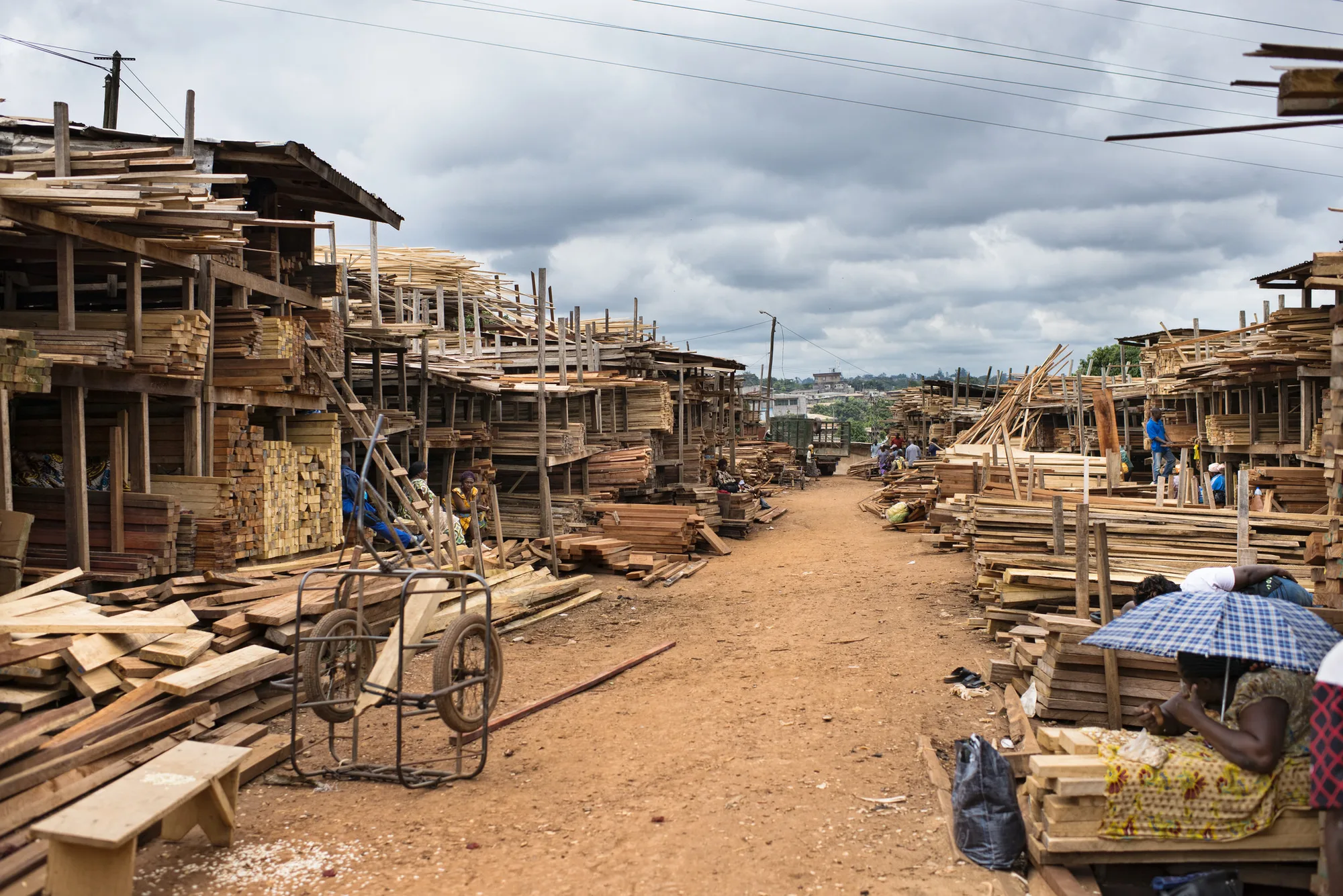
Forest-Wood
The government aims to rationally develop the exploitation and use of wood and strengthen transparency in the management of council and community forests.
Thus, the actions planned for the development of this sector will focus on:
Develop forest plantations
Strengthen the wood processing industry up to the 3rd processing level for manufacturing furniture, building homes and buildings, and industrial uses. To this end, the Government will especially specify the orientation of public orders regarding the supply of furniture to government services and strengthen standards for the use of wood in construction. In addition, the Government will set up a suitable framework for the emergence of wood technology parks
Textile-Clothing-Leather
Four objectives have been set:
Increase national cotton production at the threshold of 600,000 tons/year by 2025
Integrate the industrial processing of the local fibre to reach a minimum rate of 50% by 2030
Develop an industry for the manufacturing and designing of uniforms, including sportswear (jerseys, tracksuits, basketball, etc.) capable of meeting at least 50% of domestic demand
Supply major State bodies (army, police, and civilian) with uniforms and clothing incorporating at least 60% of Cameroonian cotton. Furthermore, the State will explore possibilities of revamping the tannery and the leather manufacturing industry (boots, bags, belts, etc.)
Mining-Metallurgy-Siderurgy
To develop the mining-metallurgical-Siderurgy sector, six policy guidelines were adopted, notably:
Increase the number of mining conventions by adopting a general audit that should propose a redirection of the policy of granting mining concessions to transnational corporations
Active support for the best local companies directly involved in the mining value chain, without subcontracting their entire operations to foreign partners
Systematic support to inter-branch organizations supervising the artisanal sectors in the exploration, mining, and marketing of gold, limestone, and precious minerals
Increased valuation of building materials from the local mining sector;
Continue the inventory of the national geological potential by producing and updating large-scale maps (scales greater than or equal to 1/200,000) to facilitate the exploration of deposits and the diversification of minerals and mineral materials
Build institutional capacity through a complete upgrading of national research laboratories in the sector
Hydrocarbons-Refining
The Government plans to develop its potential by positioning SNH as a reference strategic operator in the Hydrocarbons-Refining-Petrochemical sector.
Actions will entail:
Developing the oil potential to maintain the flow of oil revenues and its contribution to Cameroon’s development
Developing, directly by SNH and through association agreements with international partners, exploration and enhanced recovery in the current productive basins, and ensuring that the potential of new on-shore basins in the North is fully explored
Updating and enhancing the oil potential of the Bakassi peninsula
Ensuring that the legislative and fiscal framework (oil and gas code) remains an incentive for the exploration and production of Cameroon’s hydrocarbon resources
Stepping up prospecting efforts to increase reserves, maintain, and increase production
Making the best use of the gas potential and updating the Gas Plan
Developing petrochemicals [methanol-fuel and olefins (ethylene, propylene)
Restructuring and increasing SONARA’s capacity
Developing, in possible partnership with the private sector, a tar production plant;
Leading, in partnership with the private sector, a viable project for a new and major 5 million tons/year regional refinery in Kribi
Building the capacity for maintenance and repair of oil platforms.
Chemicals-Pharmaceuticals
The objective is to build a competitive Cameroonian chemical and pharmaceutical industry integrated into Cameroon’s economy, to serve the domestic and regional markets (ECCAS) and Nigeria.
To achieve this objective, the authorities plan to:
Promote, through public order and other appropriate channels, an industrial fabric of innovative, dynamic, and growing SMEs in the chemicals-pharmaceuticals sector to promote synergies by grouping into sectoral and territorial clusters (competitiveness poles)
Develop an upstream segment for the production of basic chemicals and polymers at competitive costs, needed for the diversification of the chemical industry towards the plastics industry, specialty chemicals and chemical formulation sectors, cosmetics, and pharmaceuticals, into basic chemical products
Develop, within the integrated palm oil and rubber sectors, segments that allow the supply of basic products to the cosmetics and oleo-chemical industries (“green chemicals”)
Develop the pharmaceutical industry by boosting the production of generic forms of the most used molecules (quinine, amoxicillin, ibuprofen, glucose, etc.)
Professional Construction Services
The plan of action includes:
Structuring, coordinating, and optimizing the operational and functional link between the construction industry and professional, scientific, and technical activities with a focus on operational excellence in the preparation and execution of industrial and infrastructure projects;
Building an efficient and competitive construction industry by aligning the industry with the best international standards and practices in the engineering and construction trades;
Building a strong national capacity to manage industrial and infrastructural projects and programmes operationally by aligning the training curricula in these trades with the relevant international standards and best practices, by creating the national order of project management experts;
Creating conditions for the development of national orders of critical professional disciplines.