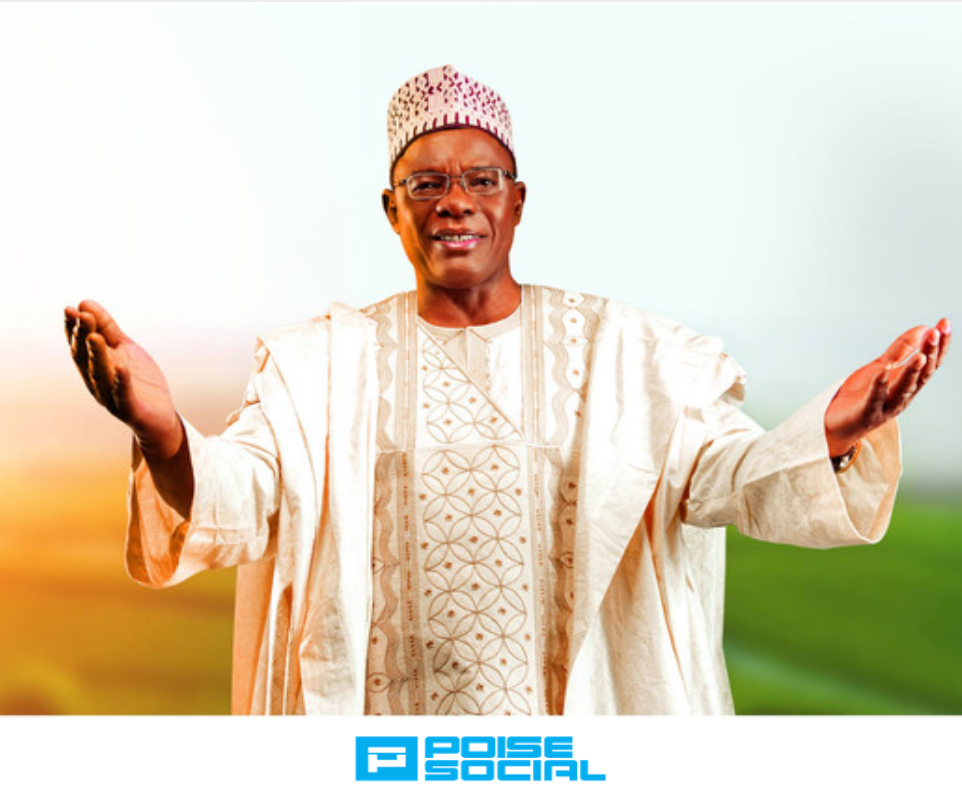

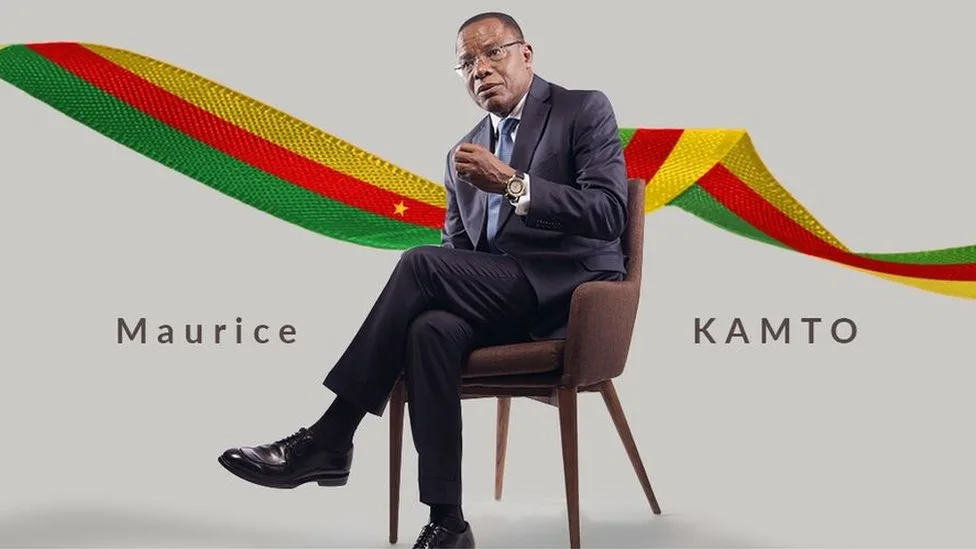
In an 88-page document, Maurice Kamto outlines what he plans to accomplish or do for Cameroon if he wins the October 7 elections. His program is divided into five different sections or what he calls projects. He has:-
The Institutional and Political Project
The Youth and Education Project
The Economy and Production Project
The Social and Solidarity Project
The Project of External Relations
In this article, I want to highlight the parts of the 88-page document that I believe are important to all of us. I will examine the program to identify what is concrete, what is overly ambitious, and what I perceive as mere political campaign rhetoric.
PROJECT ONE: POLITICAL/INSTITUTIONAL PROGRAM
He talks about introducing a policy that ensures the different branches of government (Parliament, Executive, and Judicial) are completely independent.
He plans to address the anglophone crises but is unclear on whether he will establish a federation. When he talks about rebalancing power within the country, he says ‘…and finally between the State and the Regions or the Federated States if this is the choice of Cameroonians.” He is definitely not making any promises to turn Cameroon into a federated state, so we shouldn’t expect that to happen under his leadership. Is he suggesting we’ll have referendums on all these issues? Such a plan should present his solution as a visionary leader rather than a typical political response of “what the people want.”
Presidential terms will last 5 years and can be renewed once. There will also be two rounds of elections, which I believe is the real solution to what we are all fighting for now—a coalition among opposition leaders. In a two-round election, all the opposition leaders run against each other, and the winner then faces the incumbent. Kamto plans to lower the voting age to 18.
Regarding the Anglophone crises, he agrees there is one but disagrees with the measures taken so far to address it. He blames the current regime for the ongoing conflict and plans to initiate dialogue. However, he does not see any concrete solution at this point. He still relies on the overused call for dialogue, which has so far yielded no results.
He wants to establish a new national language for Cameroon, most likely chosen from one of the already spoken local languages. He doesn’t have any specific language in mind but promises to consult with language experts to find one with syntax and vocabulary that can be pedagogically friendly. I find this to be completely unnecessary; it might even be counterproductive. We risk igniting a whole new internal conflict by trying this. What are the risks that the tribe whose language is chosen automatically gains a superiority status and an unfair advantage in positions or roles that require mastery of that language? I believe we should be more focused on moving forward rather than reverting to precolonial times. English is the most economically justified language for us to learn. He should instead focus on making Cameroonians truly bilingual in English and French, and only encourage them to learn their local languages and languages like Mandarin to prepare for renegotiating our loans and agreements with China.
He promises widespread adoption of information technology in what he calls E-governance, E-services, and E-democracy. I believe technology can significantly increase our efficiency and reduce corruption. There are clear security concerns when it comes to digital information systems. This would work if we establish a system that hires professionals and finally moves away from the ‘man know man’ approach, which is currently the norm in this country. I personally have a background in information technology management, and I have identified many sectors of our government and economy that could greatly benefit from the introduction of information technologies to streamline processes.
PROJECT TWO: YOUTH AND EDUCATION
Since he has a section that addresses social changes, I don’t think he needed to include something specifically for the youth. Most of this part seems to be there just to create an image of someone who cares especially about the youth, since we all know the young people of Cameroon bear the brunt of the poor governance by the current president every day.
Besides the broader discussion about free education for everyone, he aims to develop an education system that emphasizes hard skills over soft knowledge. Most of his plan involves establishing training centers across all regions of the country to meet various technical needs and serve people with different educational backgrounds.
Besides the idea of rewarding excellence, there is no clear goal or focus. It appears to be a plan to cast a wide net for anything that might work, and it will likely be expensive with little chance of meaningful results. His plan also overlooks the fact that many talented young people are already being ignored. It reinforces the idea that youth are “inexperienced” — which is not accurate.
A solid plan for youth and education should focus on industries where the country intends to invest. If we plan to invest in agriculture and produce more cotton, then we need to train people for jobs in textile manufacturing and related fields. He mentions this approach but plans to implement it only starting at the university level, which I find to be too late in the process. We need to spark interest earlier than that. He seems to completely ignore the human side of education. You know the saying, you can take a horse to the stream but you can’t make it drink water.
Like I said at the beginning, I see no particular need to focus on the youth. If you make the right choices for the country as a whole, it will trickle down.
The part that stands out for me here is the idea of making Cameroon the leader in the Pan-Africanism movement by creating the Federalist Youth Movement of Central Africa and inviting other countries to participate, as a step toward a United States of Africa.
PROJECT 3: ECONOMY AND PRODUCTION
In summary, he plans to increase production and productivity across the board, while also working to make Cameroon more appealing to foreign investors. The plan includes:-
Modernizing and strengthening the Douala Stock Exchange to make it “a real instrument for financing the national economy.”
Tapping into the financial liquidity of Cameroonians in the diaspora by providing secure ways for them to invest their money back home.
Economic policy reform to ease the process of starting and running a business, owning fixed capital, and also tax reform to provide incentives for investors. He proposes tax equalization, which “is based on a limitative list of two major blocks of taxes and a constitutionally regulated distribution of the national budget between the State and the Regions (or federated entities).” Essentially, the state collects corporation tax, customs duties, Personal income tax, VAT, and Major Social Solidarity Tax, while local governments retain property tax, housing tax, and business contributions to local development. I find this a big step towards decentralization, but I think personal income tax should be collected locally. That is, you pay your individual income tax to the region where you claim residency. Laws can then be established to determine what qualifies one for residency in a particular region and how one can change their residency status.
Land reform is a major goal for Kamto. His plans include proper zoning and clear land ownership procedures. This also involves creating functional cities. He aims to build a CITY OF THE FUTURE in the center of the country, at the southern edge of Adamawa and north of Mbam-et-Kim, in a very sparsely populated area. This new city, a hub of innovation, will be a city of the future—where Cameroon will discover talents and shape its technological future. It will be situated on the railway axis linking the South to the North and will be connected to other major cities like Douala and Yaoundé by highways.
Reconvert Douala and shift most of the port activities to Kribi. The port of Douala will be transformed into a marina and a small cabotage port. We will especially make Douala the financial and business capital, the Manhattan of Central Africa. Industries in Douala will also be moved gradually to Edea. Yaoundé will remain the political capital with an additional role as a cultural hub. As a result, Yaoundé will host a large library focusing on the black world and the African diaspora, a world-class opera house, and a national academy of arts and culture.
A new industrial zone will be built between the CITY OF FUTURE and Ngaoundéré, which will become the main industrial hub in northern Cameroon. Ngaoundéré will then serve as the crossroads for Cameroonian products headed to the North and Chad, to the East and the Central African Republic, and to the West in Nigeria. Another industrial zone will be developed in the agricultural basin between Foumbot, Bafoussam, and Bamenda.
Improving the money exchange mechanism to make it easier to move funds within the country and also in and out of the country.
Review international trade agreements and opt out of those that suffer our economy.
Increase productivity by implementing and enforcing a 40-50hour work week; this is also in a bid to attract foreign investors and increase competitiveness.
Incorporating the informal sector into the national economy and stimulating the growth of small and medium sized enterprises.
Heavy investments in companies operating in Agriculture, ICT, and Biotechnology. This will see a total revamp of Silicon mountain in Buea.
Leave the CFA Franc and create our own currency. He however is unsure of how this will happen and begs to proceed with caution.
Reduce government spending by auditing and consolidating the state salary file. Also, reducing privileges of government official and exercising more control over things like administrative vehicles and mission allowances.
The final part of the plan has to do with improving the quality of urban life by improving transport and logistic infrastructure, the access and quality of social amenities like water and electricity and implementing proper waste and sewage management systems.
Of all the different sectors, Kamto’s Economic plan is solid and visionary. With proper prioritization, even if he does not achieve all of his plans in the span of his presidency, his economic plan can set the pace for the future economic climate in Cameroon which will be a robust one.
PROJECT FOUR: SOCIAL AND SOLIDARITY
Kamto’s social life program is very elaborate and also visionary. Some major aspects include:-
Women Empowerment
Provision of basic healthcare and regulation of supplementary healthcare provisions
Improvement of local health and drug management facilities
More health regulation of food products.
Expansion of social housing
sustainable Social Security
Kamto shows he is a visionary leader with his plans of improving medical education in Cameroon with the goal of making Cameroon a “pole of excellence in health care in certain disciplines and ensure that the country becomes a destination for health tourism.”
Another visionary idea is that of making Cameroon a nation of athletes which he plans to achieve by improving sports education and sporting facilities.
PROJECT FIVE: FOREIGN POLICY AND DIASPORA
Allow dual nationality
Make the Cameroonian diaspora a significant player in national development something he plans to achieve through a National Agency of Cameroonians Abroad (NACA)
Encourage high skilled professional Cameroonians abroad to return home and use their knowledge to serve in the development project for the country
Transform our embassies abroad and make them a real home for Cameroonians in other countries.
Improve diplomacy
CONCLUSION
Kamto’s has a solid plan that is likely to boost the economy of the country and improve social standards. However, the vagueness in the political program and the weak handshake to the youth leaves room for questions.
We are all aware that most of our current problems stem from the political and institutional level. Looking at Kamto’s plans for the economy and social structures, there is not much in there that we can say is totally unheard of in Cameroon. We all know most of the projects he talks about already exist on paper but the politics of the stomach as we call it here has made sure that those projects remain only on paper.
I can say at this point we have the guy that can manage our economy. As we dissect the programs of the other candidates, we will be on the lookout for the one that can hold a tight grip at the political and institutional level.