

The United States has ordered an immediate withdrawal from dozens of international and multilateral organizations following a review initiated last year by an Executive Order. The decision, formalized in a presidential memorandum addressed to all executive departments and agencies, directs the U.S. government to cease participation in or funding for a wide range of United Nations and non-UN bodies.
The memorandum names 35 non-UN organizations and 31 UN entities spanning climate policy, migration, democracy support, development finance, energy transition, gender equality, peacebuilding, and scientific research. Collectively, they form much of the architecture that coordinates international cooperation on development and governance issues.
Among the non-UN bodies are global forums on climate science and biodiversity, renewable energy coalitions, democracy and rule-of-law institutes, and international development law organizations. The UN list includes several core ECOSOC commissions, funds, and specialized offices that operate across Africa, Asia, Latin America, and the Middle East.
While the withdrawals do not automatically dissolve these organizations, the loss of U.S. funding, technical support, and political backing is likely to affect their scale, influence, and long-term sustainability.
Several of the entities named in the memorandum play a direct role in African development, governance, climate adaptation, and peacebuilding.
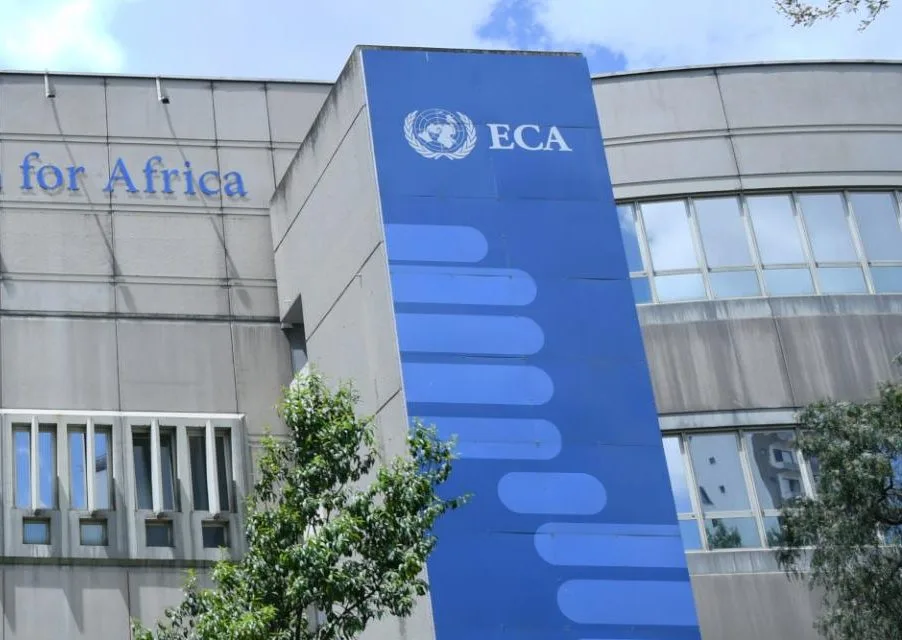
Most prominent among them is the Economic Commission for Africa, a UN regional body that supports African governments on economic policy, trade integration, statistics, and sustainable development. The commission has been central to continental initiatives, including the African Continental Free Trade Area (AfCFTA) and climate-resilient growth strategies.
The memorandum also orders withdrawal from the Office of the Special Adviser on Africa, which serves as a coordination and advocacy hub linking African priorities to the UN system and international partners.
Institutions linked to peace, justice, and democratic governance in African contexts are also affected. These include the International Institute for Democracy and Electoral Assistance, which works extensively on electoral systems and constitutional reform across the continent, and the International Development Law Organization, a key provider of legal reform and justice-sector support in fragile and post-conflict states.
Climate and environmental governance bodies with significant African engagement are also on the list. The Intergovernmental Panel on Climate Change, the International Renewable Energy Agency, and the UN Framework Convention on Climate Change underpin climate finance flows, adaptation planning, and energy-transition strategies across African countries.
Social and demographic institutions, such as the UN Population Fund, the UN Entity for Gender Equality and the Empowerment of Women, and the UN Human Settlements Programme, are also included, and all maintain extensive field operations across Africa.
For African governments and civil society organizations, the decision raises questions about funding gaps, program continuity, and shifting geopolitical alignments. While many of these institutions rely on a broad donor base, U.S. withdrawal may reduce leverage, slow reforms, or accelerate efforts to diversify partnerships toward Europe, Asia, and emerging multilateral financiers.
The administration has emphasized that the review process is not complete, signaling that further changes to U.S. engagement with international institutions may still be forthcoming.
Full List of Organizations From Which the United States Is Directed to Withdraw
A. Non-United Nations Organizations (35)
24/7 Carbon-Free Energy Compact
Colombo Plan Council
Commission for Environmental Cooperation
Education Cannot Wait
European Centre of Excellence for Countering Hybrid Threats
Forum of European National Highway Research Laboratories
Freedom Online Coalition
Global Community Engagement and Resilience Fund
Global Counterterrorism Forum
Global Forum on Cyber Expertise
Global Forum on Migration and Development
Inter-American Institute for Global Change Research
Intergovernmental Forum on Mining, Minerals, Metals, and Sustainable Development
Intergovernmental Panel on Climate Change
Intergovernmental Science-Policy Platform on Biodiversity and Ecosystem Services
International Centre for the Study of the Preservation and Restoration of Cultural Property
International Cotton Advisory Committee
International Development Law Organization
International Energy Forum
International Federation of Arts Councils and Culture Agencies
International Institute for Democracy and Electoral Assistance
International Institute for Justice and the Rule of Law
International Lead and Zinc Study Group
International Renewable Energy Agency
International Solar Alliance
International Tropical Timber Organization
International Union for Conservation of Nature
Pan American Institute of Geography and History
Partnership for Atlantic Cooperation
Regional Cooperation Agreement on Combatting Piracy and Armed Robbery against Ships in Asia
Regional Cooperation Council
Renewable Energy Policy Network for the 21st Century
Science and Technology Center in Ukraine
Secretariat of the Pacific Regional Environment Programme
Venice Commission of the Council of Europe
B. United Nations Organizations and Bodies (31)
UN Department of Economic and Social Affairs
ECOSOC — Economic Commission for Africa
ECOSOC — Economic Commission for Latin America and the Caribbean
ECOSOC — Economic and Social Commission for Asia and the Pacific
ECOSOC — Economic and Social Commission for Western Asia
International Law Commission
International Residual Mechanism for Criminal Tribunals
International Trade Centre
Office of the Special Adviser on Africa
Office of the Special Representative of the Secretary-General for Children in Armed Conflict
Office of the Special Representative of the Secretary-General on Sexual Violence in Conflict
Office of the Special Representative of the Secretary-General on Violence Against Children
Peacebuilding Commission
Peacebuilding Fund
Permanent Forum on People of African Descent
UN Alliance of Civilizations
UN Collaborative Programme on Reducing Emissions from Deforestation and Forest Degradation in Developing Countries (UN-REDD)
UN Conference on Trade and Development
UN Democracy Fund
UN Energy
UN Entity for Gender Equality and the Empowerment of Women (UN Women)
UN Framework Convention on Climate Change
UN Human Settlements Programme (UN-Habitat)
UN Institute for Training and Research
UN Oceans
UN Population Fund
UN Register of Conventional Arms
UN System Chief Executives Board for Coordination
UN System Staff College
UN Water
UN University