

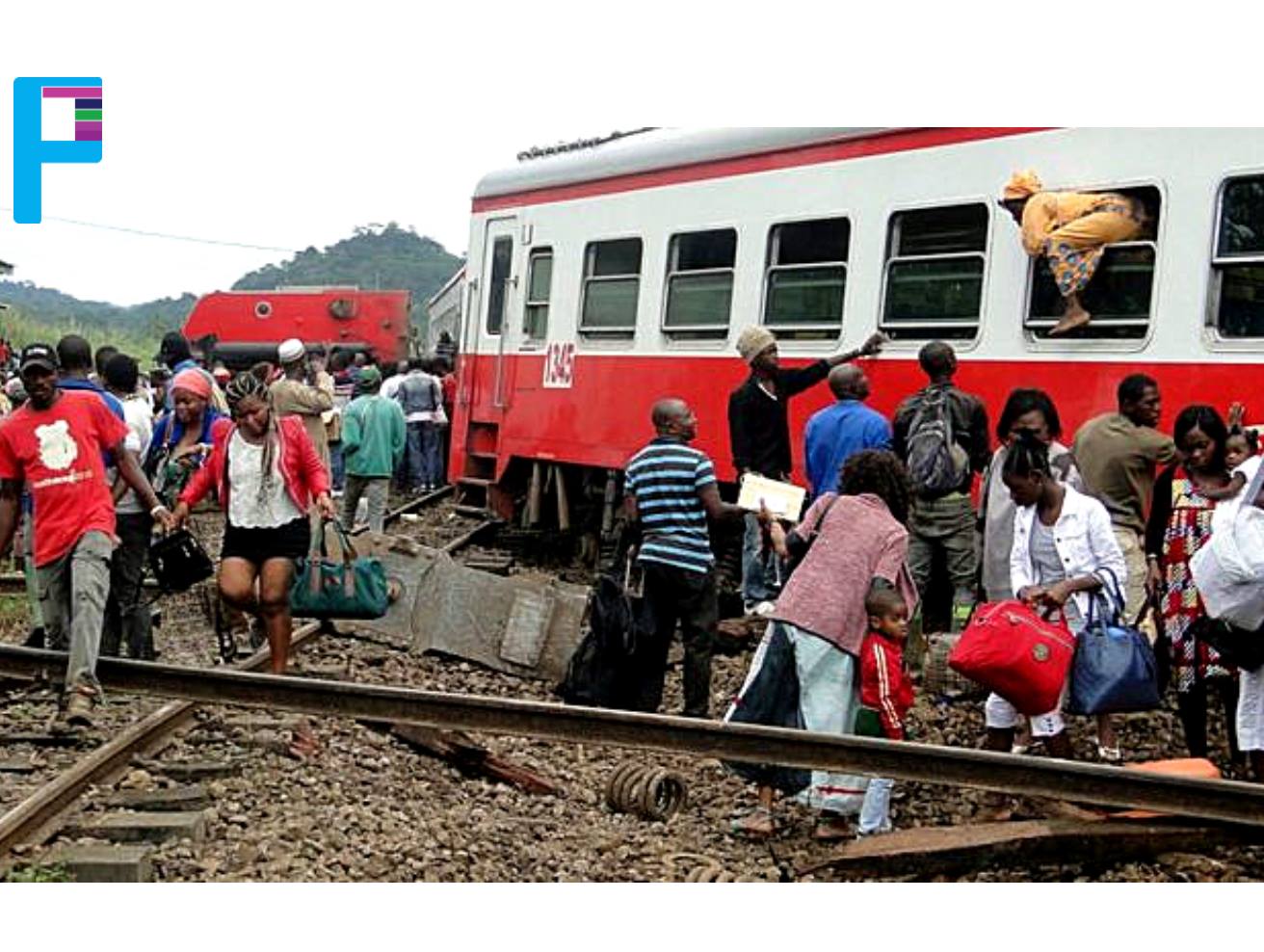
I find that generally in Cameroon, people spend more time thinking of reasons why something can’t work, valuable time they could better employ in thinking about the one reason why it can work. I would take this out personally on some people but I realize that attitude is a construct of our culture and our environment. Take a look out of your window and try to make a straight line through three or more buildings and l’impossible suddenly divient Camerounaise.
I do not know much about psychology but I want to believe some sort of psychological conditioning imparted by our environment has resulted in this type of behavior. In our daily routine we do not walk or drive through many straight paths. It is unclear whether that is as a result of our natural topography or our natural love for disorder.
For many of us, a trip to the closest ‘carrefour’ involves passing through other people’s backyards or front yards or both. We move around like we are in the world’s most complicated obstacle course. The safest way to walk around here is by looking down, it is almost like our minds are not predisposed to imagining the possibility of a straight and safe path.
One can be tempted here to think it is a good thing as life is basically an obstacle course, but we as a people have exaggerated the obstacles to a point where we create extra ones even where there is actually none. We can attribute certain happenings to mother nature but there are a lot of disasters we have carefully designed and walked into either by our actions or our negligence.
Contrary to what is mostly reported, my observation is that Cameroon is one of the few countries in the world that has been growing backwards for over three decades. All what we see as progress is just some cosmetic coverups of the real decay of infrastructure and every other asset we have in Cameroon. I just crossed the newly constructed Wouri bridge for the first time today and the surface is so rough you would think it is a 50 year old piece of infrastructure - and some people are too starved of the sight of great road networks that they would celebrate such a basic achievement. For as long as I can remember, they have been constructing that bridge, something which in any country that is serious about its plans for development would take less than a year.
By the way, why is there a French flag flying over that bridge?
I write this just a few days after an accident involving a military truck claimed a young lady’s life and left a lot of damage followed by more damage caused by people who came out as sympathizers but were quickly turned into rioters by ‘security’ forces who have adamantly continued to perpetrate a violent and careless behavior towards the very people they are meant to protect.
I visited Buea for the first time in 2015. From what I gather, there used to be a partition separating upwards and downwards traffic on the main road between Molyko and GRA but that partition was removed to welcome Biya for celebrations of the 50th anniversary of Cameroon’s reunification. Crossing the said road in Buea is a very demanding exercise. There are no traffic lights, not to talk of zebra crossings.
I mean do we have engineers or people who do things to accommodate the so called president who is never around. You ignore all road safety measures for one man to pass and never come back. I have 000000000 civil engineering knowledge but I can guess a partition is not a decorative piece that can be included or left out - out of discretion and taste level; it is there to control traffic and more importantly to limit damages to one side of the road in case of an accident.
In a country where a significantly larger part of the population are pedestrians, how do we still construct roads without sidewalks. Even in the rare cases where sidewalks have been provided, pedestrians still have to constantly dodge drivers who have reclaimed the sidewalks to be part of the main road - arrogant while they are at it.
Buea is a university town and there is bound to be a lot of foot traffic. I see no safety measures in place to protect pedestrians. I see nobody cares enough to even think that is something to think about.
Any-Ha!
Why am I writing this article?
Because we have come to accept too much crap as the norm and we have to stop for a minute and make the decision to change that mindset. A mindset that is contributing to our retarded growth and the constant praise of mediocrity we see around here.