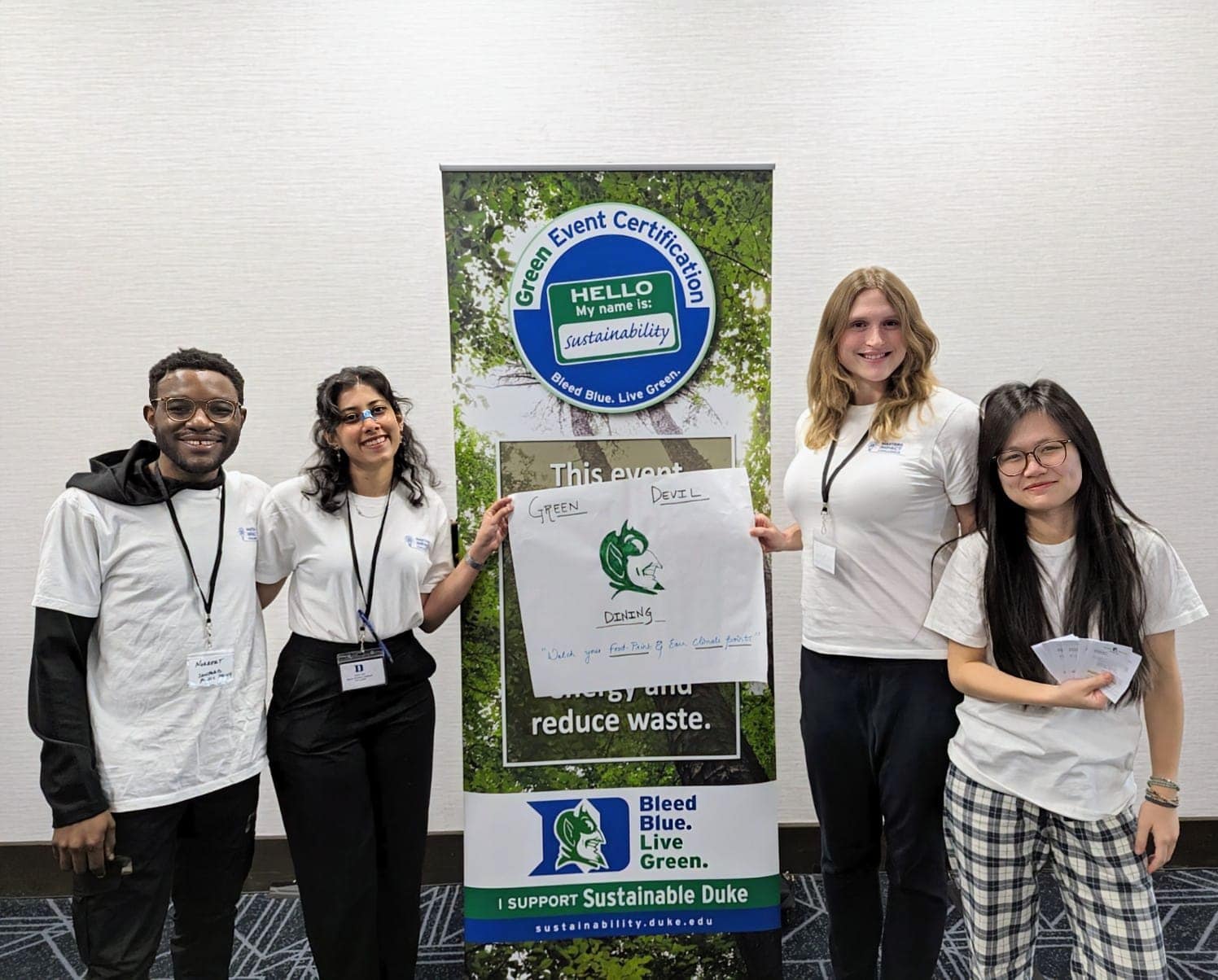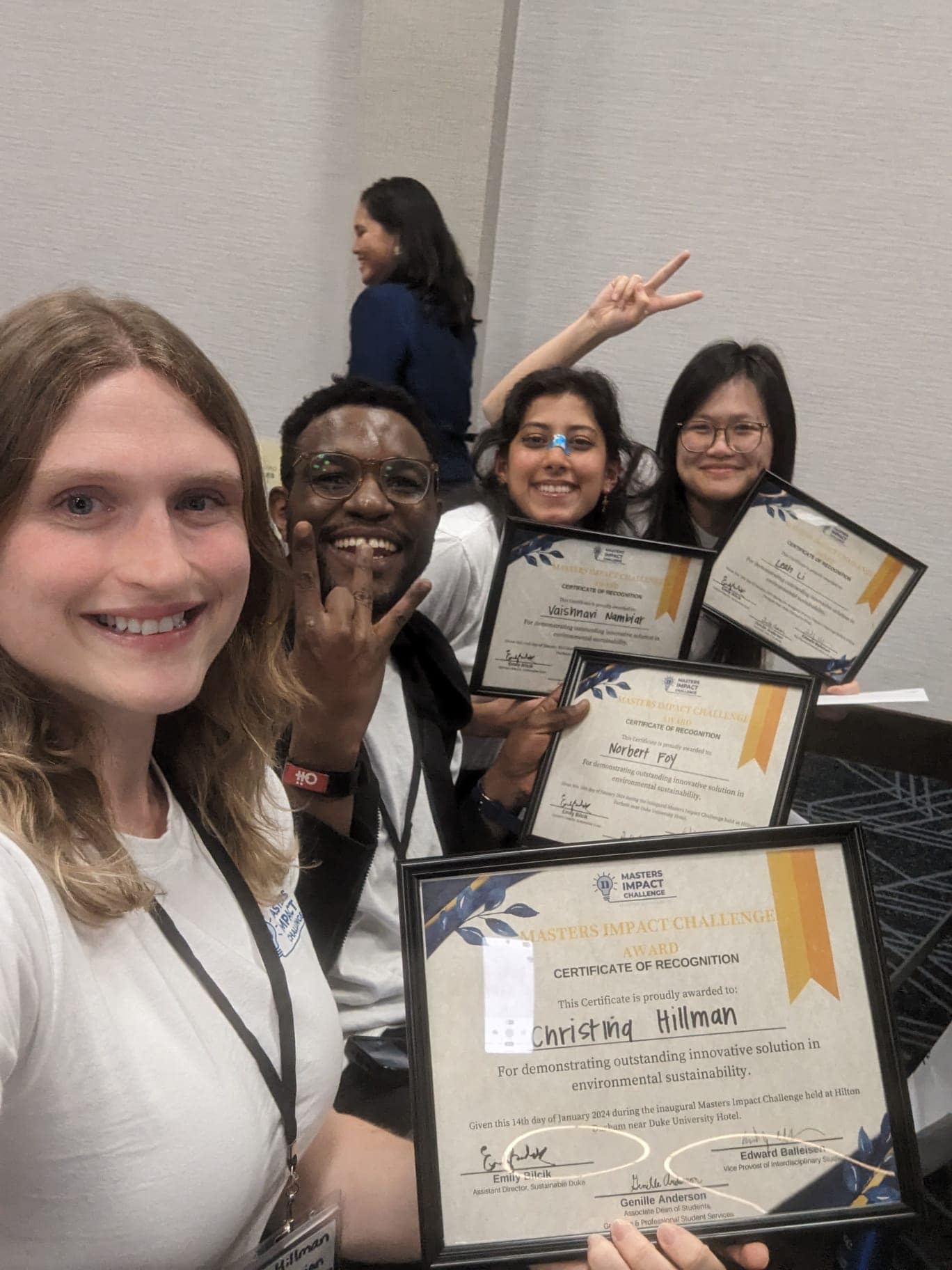

The founder of PoiseSocial, Norbert Foy, and his teammates have emerged as winners of the inaugural Masters Impact Challenge (MIC) at Duke University –a competition designed to harness graduate students’ creativity in tackling real-world sustainability challenges.
The challenge brought together forty master’s students across nine interdisciplinary teams, each tasked with a single question: How can Duke cultivate a more sustainability-fluent and climate-conscious student body?
During the discovery phase, Norbert’s team uncovered a revealing insight. Ninety-two percent of students were unaware of the environmental impact of the food they consumed daily, yet 68 percent said they would make more climate-friendly food choices if they had better information.
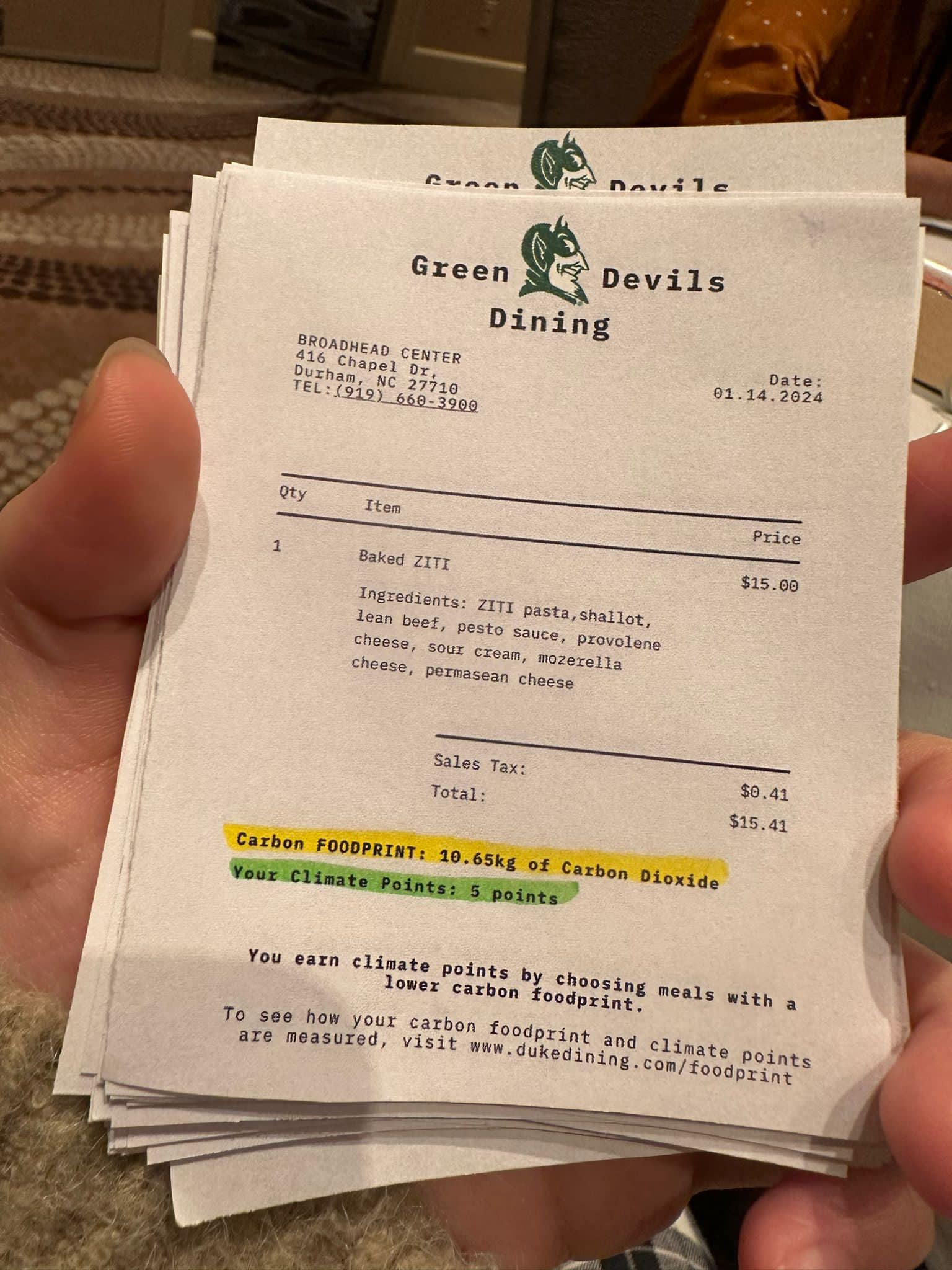
From this finding came the team’s winning concept –a proposal to make sustainability a visible, everyday experience through food. Their solution: a “carbon FOODPRINT” system that quantifies and displays the carbon emissions associated with each meal sold at Duke’s dining facilities.
Turning Meals into Climate Awareness
Under the proposal, a dedicated task force would collaborate with Duke Dining Services to calculate the carbon intensity of every item on campus menus. Students would see, alongside calories and ingredients, the estimated carbon FOODPRINT, a simple metric revealing how each meal contributes to greenhouse-gas emissions.
The initiative aims to turn dining into a moment of reflection and education. By making the climate impact of choices as visible as nutritional facts, the project hopes to nudge behavioral change toward more sustainable consumption.
To reinforce that shift, the team also designed a reward system: students who opt for low-carbon meals would earn climate points redeemable at campus stores –blending gamification with sustainability.
Innovation Through Collaboration
“Our success was all about teamwork,” said Norbert. “I had the privilege of working with three brilliant women from different disciplines and cultures — Vaishnavi from India (Engineering Management), Leah from China (Environmental Studies), and Tina from the United States (Physician Assistant Program).”
Together, their diverse expertise produced a holistic solution that merges environmental science, behavioral insights, and technology-driven engagement. The idea resonated strongly with judges, aligning closely with Duke’s ambitious goal of achieving carbon neutrality by 2024.
Beyond the Challenge
The Master’s Impact Challenge is part of Duke’s broader effort to foster cross-disciplinary innovation and experiential learning. As universities worldwide strive to reduce their environmental footprint, Duke’s model empowers students not only to learn about sustainability but also to design it.
The team hopes Duke administrators will pilot the carbon FOODPRINT idea in dining halls and potentially scale it to other institutions. If successful, it could become a model for campuses worldwide.
About the Masters Impact Challenge
Launched in 2024, the Masters Impact Challenge (MIC) invites graduate students from across Duke’s schools to collaborate on solutions that promote sustainability and climate action. The program emphasizes real-world experimentation, human-centered design, and interdisciplinary teamwork.