

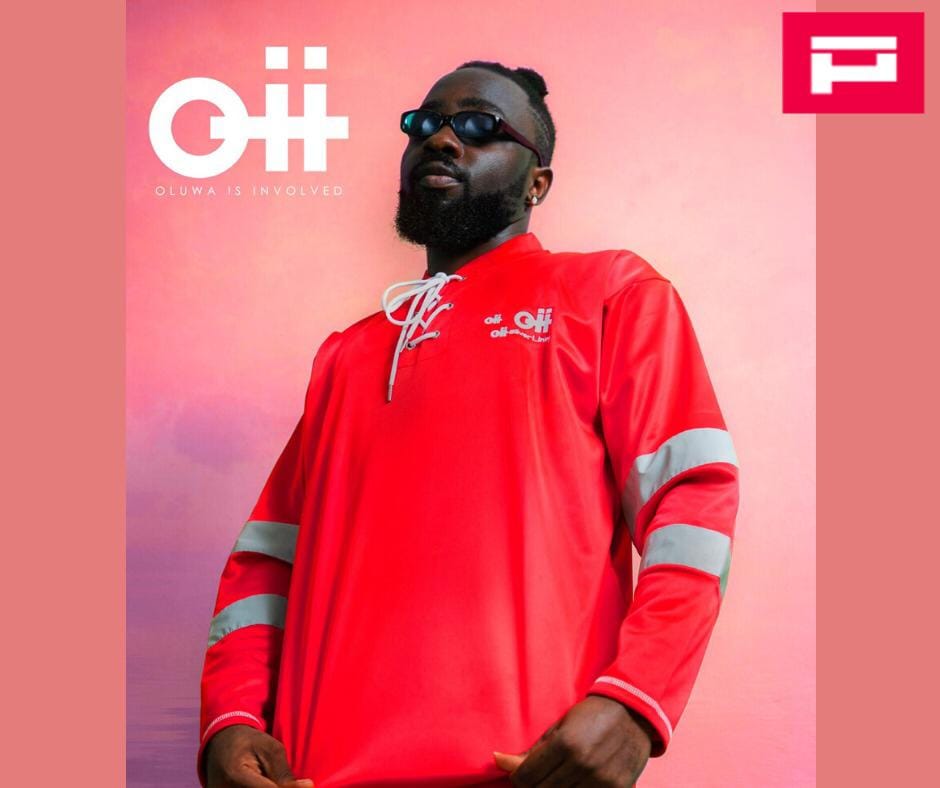
For anyone who follows my co-writer here on his personal page, (I am talking about Tino Foy), you may have certainly come across his promotion of the clothing brand ‘Oluwa Is Involved’. The clothing brand, just like PoiseSocial is a division of a company called ‘arTchitect’, owned by Tino himself.
It is perhaps at this point that I let you know that I am just a humble contributor to PoiseSocial, this platform being the first step in the building of a full digital media division for arTchitect; although Tino sometimes consults with me on a number of issues, since we are essentially in the same line of business, and I am elsewhere occupied.
Now, for those of you who follow Tino, you may have certainly come across his recent berating of the many people who have found an issue with the brand name – the bone of contention being the use of ‘Oluwa’, the Yoruba word for God.
In his usual characteristic style, Tino defended the choice of the brand name by taking control of the argument with a series of postings on the subject, and just basically trolling those who had/have a contrary opinion.
He also stated clearly his reason for choosing such a brand name; saying that the market he was looking for isn’t just Cameroonian and that people needed to see beyond their horizons, which is what he was doing. His strategy is simple, he wants to hack the Nigerian market and then use that money to develop other things right here in Cameroon.
It is worthy to state here that Tino did not start the brand. He acquired it from Bakeh Randy and he has now put it under arTchitect’s fashion division.
You may be wondering what I think about the brand name…. well, I hate it. I’ve never liked it, and I still do not. Although I never voiced my opinion about it because I have no role in its development. It is a life lesson that I try to apply always, even though my articles on PoiseSocial make me toe that line a lot. I am only talking about it now because Tino asked my opinion. And he will be discovering it in this article like you all.
I absolutely hate the brand name. And that is the chauvinist in me speaking. It is the proud Cameroonian in me speaking – as hard as it is to find something to be proud about in this country.
But whatever you and I think at this point is moot. Tino is one of the most stubborn persons I know, and that brand name is not going to change. But I also know that it is that stubbornness that has made him break many little glass ceilings he wouldn’t have otherwise broken, and walked into so many rooms that he would not have walked into, and done so many things he would not have done. And so I know better than to try to stop him. Knowing Tino, posterity will very likely give him reason.
It is for that reason that I put my chauvinist proclivity aside and look at the bigger picture.
Perhaps our biggest issue with the brand name is that is it Nigerian. A name coming from next-door neighbour, in whose loud and bodacious cultural shadow we seem to be constantly living in, and particularly for us ‘anglophone’ Cameroonians.
So it makes sense that people are pissed by it. We live at a time when representation matters and Africans are increasingly trying to detangle themselves from the monolithic perception and the romanticising of black Africa that is far from the reality that the west thinks it is. It is the same reason why many Africans are pissed about Beyonce and her upcoming documentary “Black Is King.” Tino being chastised as well is just the normal occurrence of things.
But this question needs to be asked: Would we have had an issue with the brand name if it was named “Deva,” the Sanskrit word for God, or “Diyos,” the Tagalog for God, or “Kami” the Japanese word for God?
Nike, the American brand is named after the Greek goddess of Victory. Pandora is the first woman created, according to Greek mythology. Pandora is also the name of a U.S company. The VERSACE logo is based on the Greek goddess, Medusa. VERSACE is an Italian company. I should throw in Trojan condoms for good measure. These are all companies carrying foreign names and symbols.
Perhaps, Tino’s biggest sin in all this was not crafting a brand story before thinking about selling his merchandise. With a correct and relatable brand story, you can be able to buy people on your side. There is a very rich and interesting story on Yoruba deities. Anyone who has had even the smallest interest in that topic must have heard about Orishas – spirit beings sent by the supreme Yoruba deity, Eledumare, to guide human beings on how to live and to interact with each other successfully here on Earth.
There is so much storytelling to draw from the pantheon of Yoruba gods that could have been used to sell the Oii brand in a manner that was more digestible and more accepting to the lay folks that we are.
Perhaps the issue also has to do with the democratisation of our own traditional African religion. Voodoo, a religion whose central theme is about harnessing the powers of the 4 elements that make up the universe (earth, wind, water, fire) to make the earth balanced and liveable for all human beings has been represented in TV by white as an evil religion where people are killed by pricking dolls that represents them.
On the other hand, the Seven Works of Hercules, the story of Achilles and the Trojan horse, the search of the Golden Fleece by Jason and the Argonauts, and just about every story in Homer’s “The Iliad and the Odyssey” has been shown to us through the lenses of heroes with taut muscles and amazing fighting abilities, as acts of bravery by these protagonists.
Perhaps your problem, and my problem with ‘Oluwa’ is coming from a deeper place; and in this place we have not learned to love the beauty of our own African religions to point where the lines between Oluwa, Chukwu, Chapeuh Si and Tata Nyuy is blurred, because at the end of the day, we are more related to Oluwa than we are to Sango Yesu Cristo.
This issue presents a bigger problem than we have begun to think about. Even Tino himself no doubt never thought at it from this perspective. The root of this problem goes deeper than our back and forths on Facebook can solve. We are going to need a lot more than that to completely tackle the issue, and we are going to need a lot more time as well.
But at least, we are having the conversation already.
I don’t like the brand name… but truly, it does not matter. What matters is that I have asked Tino for and arTchitect tee-shirt and I am yet to see it.
- Wandji Wilfred.