

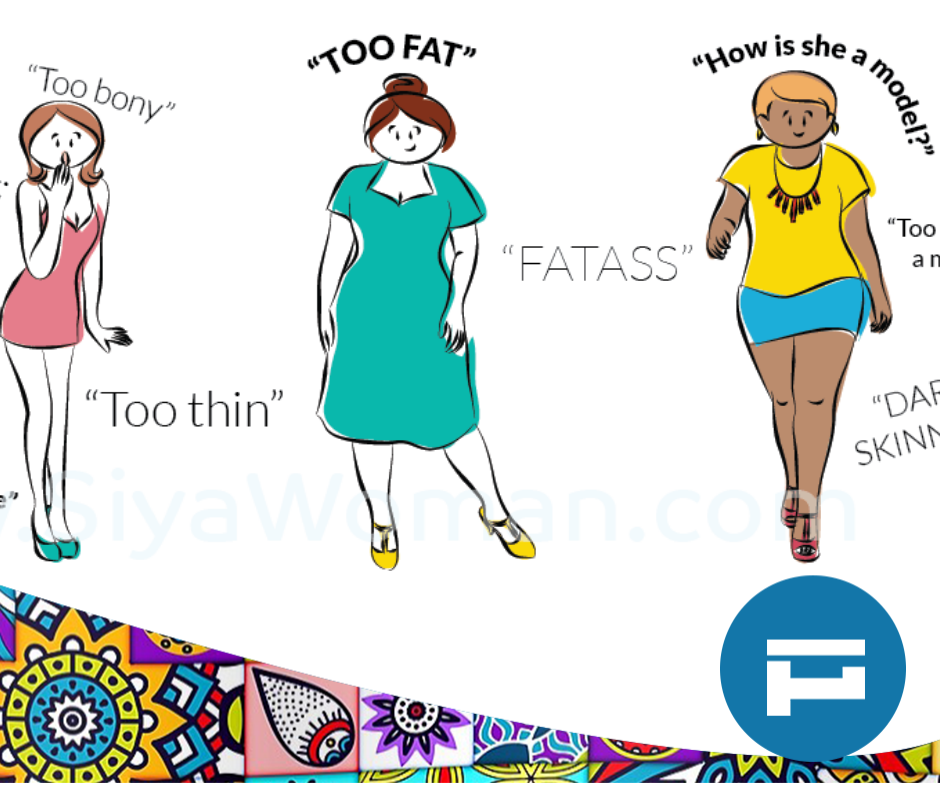
Defined as the act or practice of making critical, potentially humiliating remarks about a person's body, body shape, or size, body shaming is somewhat common among Cameroonians. As a matter of fact, you have almost certainly seen headlines screaming that a favorite star, from Cameroon, is packing on the pounds. What's more, you have probably been on the receiving end of weight-related comments from Facebook friends. That said, is body shaming really necessary -- good or bad?
REASONS WHY BODY SHAMING IS BAD
For starters, multiple studies suggest that body shaming negatively affects body image and mental health. In fact, these studies propose that body shaming could lead to low self-esteem, depression, and eating disorders such as anorexia nervosa and associated disorders (ANAD). Even worse, people who frequently receive body-shaming attacks are often stressed out, may have anxiety issues, and usually isolate themselves.
Additionally, body shaming breeds unrealistic expectations of women for men and boys, and vice versa. That is, body shaming encourages men and boys, or women and girls, to internalize impossible standards. Consequently, these men or boys begin to hold women or girls up to these standards, and the other way around. In addition, by way of illustration, because of body shaming, a man may miss a perfect match for himself, on account of looking for a "unicorn" -- a lady with the perfect body.
In one way or the other, body shaming translates to human rights abuse. The problem is, body shaming fosters sizeism, also known as size discrimination. Actually, human rights legislation ought to protect body size and shape. Thing is, just as people come in all colors and heights, people come in all shapes and sizes.
Further, body shaming is minding another’s business. That is, someone may be happy with how they look or they may feel they need some serious changes, but the only opinion that matters is theirs. Worse yet, in one way or the other, body shaming translates to human rights abuse. The problem is, body shaming fosters sizeism, also known as size discrimination. Actually, human rights legislation ought to protect body size and shape. Thing is, just as people come in all colors and heights, people come in all shapes and sizes. Furthermore, people have the right to enjoy the body shape or size they choose or possess without getting shamed.
To top it all off, body shaming is just another form of bullying, whether it is in person or online. The thing is, words matter and have the power to hurt. Worded differently, body shaming, like bullying, uses the same methods and produces the same results. Put plainly, on many occasions, it seeks to hurt, humiliate, intimidate, or coerce someone perceived as vulnerable.
REASONS WHY BODY SHAMING IS GOOD
First, and most obviously, how you look is often a reflection of who you are, and how you would want to be treated. More to the point, obese, dirty, and unhealthy people should not be treated the same way everyone else is treated. Put differently, treating such people the way everyone else is treated is synonymous with condoning laziness and unhealthy behaviors. Even nicer, publicly shaming overweight individuals could ensure that they do not serve as role models for younger potential overweight persons, thereby preventing a vicious cycle.
Second, body shaming might make insecure people feel awful, it might even make them do drastic things, but lying to them is even worse. Properly speaking, lying to them is hypocritical. In essence, it is better, to tell the truth, and shame the devil, than lie to them and feed their madness -- "short term pain for long term gain" is the mantra we should be teaching everyone.
Third, body shaming, especially weight shaming, might encourage weight loss. The thing about this is, body shaming embarrasses and might motivate obese persons to deal with their problem. Better yet, mindful of the fact that certain diseases, such as diabetes and heart diseases, are linked to overweight, weight shaming might be another way to prevent these diseases. In other words, body shaming might discourage laziness and encourage people to make healthy lifestyle choices, thereby reducing the prevalence of overweight-related health disorders. Put simply, direct disapproval almost always leads to action.
Finally, we do not say it is ok to smoke, so why do we say it is ok to be fat? Well, actually, that is double standards. Here is the thing: smoking or excessive alcohol consumption is unhealthy, likewise obesity. So, why should we tolerate overweight and obesity, but not excessive smoking or alcohol consumption?
ALL IN ALL
Body shaming is pretty common among Cameroonians. That is, almost every Cameroonian has been on the receiving or giving end. This implies, in Cameroon, there are just as many people who think that body shaming is wrong, as there are people who believe that it is okay to body shame others. What's more, opinions on both sides of the coin are backed by solid arguments.
That said, is it okay to body shame others? What do you think?
Dr. Ndifor Judex