

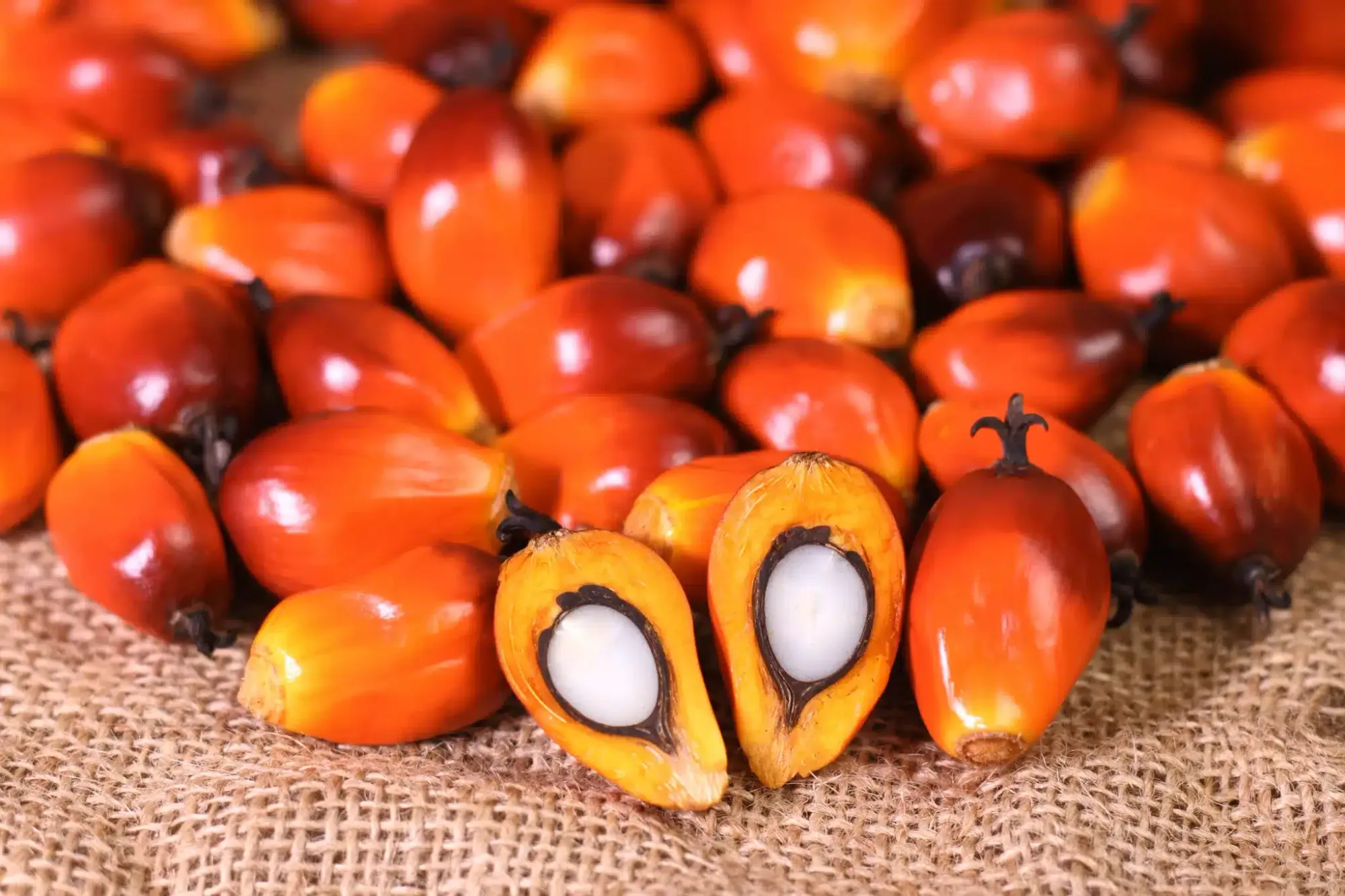
In the 1960s, a small delegation from Malaysia and Indonesia visited Cameroon to study oil palm cultivation. At that time, Cameroon’s coastal plantations in places like Ekondo Titi and Lobe were among the most advanced in tropical agriculture. They had developed high-yield, disease-resistant varieties that have become the foundation of today’s global palm oil industry.
Six decades later, the situation has changed dramatically. Indonesia and Malaysia now produce nearly 85 percent of the world’s palm oil (about 60 million metric tons combined), while Cameroon’s production barely exceeds half a million. Cameroon, once the leader, has become a footnote.
From Cameroon’s Forests to Asia’s Estates
The oil palm (Elaeis guineensis) is native to West and Central Africa. Long before the colonial era, its oil was used in daily life for food, soap, lamp fuel, and medicine. When European planters started experimenting with large-scale production, Cameroon’s humid coast proved to be ideal. By the mid-20th century, local breeders had developed hybrids known for their resilience and high yield.
When Malaysia and Indonesia first imported their Tenera hybrids in the 1950s and ’60s, they came directly from African stock. Even the tiny pollinator weevil, Elaeidobius kamerunicus, discovered in Cameroon, was exported to Asia in the 1980s to boost pollination rates. It doubled yields overnight.
Five Generations Ahead
Where the paths diverged is in what each region did after planting the seed.
Malaysia and Indonesia didn’t just farm; they built institutions. The Malaysian Palm Oil Board (MPOB) and Indonesia’s Oil Palm Research Institute (IOPRI) became engines of continuous improvement. Every 15–20 years, a new generation of higher-yielding, disease-resistant palms replaced the old. Through science and deliberate policy, those breeding cycles were shortened to roughly a decade, producing fifth-generation hybrids that yield up to eight tons of oil per hectare.
Cameroon, by comparison, still relies heavily on second-generation materials, some of which date back to colonial times. Yields are around two tons per hectare. Genetic, institutional, and strategic factors cause the productivity gap.
What Southeast Asia Got Right
Three pillars explain Southeast Asia’s dominance:
Industrial vision over raw production.Malaysia quickly expanded beyond crude exports by developing refining, oleochemicals, biofuels, and cosmetics industries that now produce billions each year.
Research as a national strategy.Breeding programs were treated like national infrastructure, not academic exercises. Public-private funding ensured constant innovation.
Coordinated value chains.Governments linked smallholders to processors, standardized quality, and built export logistics. Efficiency, not luck, made the difference.
They turned palm oil into a national project, aligning science, finance, and policy.
Why Cameroon Stalled
Cameroon’s early research leadership declined over decades due to underinvestment. Public companies like Pamol and CDC faced difficulties, while smallholders—who produce about 70 percent of the output—worked with aging trees and simple presses. Support from institutions declined, land-tenure issues discouraged replanting, and infrastructure bottlenecks increased costs.
The result: low yields, limited processing capacity, and weak export competitiveness. Most Cameroonian palm oil remains in crude form, while refining and branding with added value happen abroad.
Lessons for Africa’s Industrial Future
Cameroon’s palm-oil paradox mirrors broader African challenges in cocoa, coffee, and rubber: the continent provides raw material but rarely captures industrial value. The key lessons are clear:
Own the research cycle. Every delayed breeding or engineering generation puts a country decades behind its competitors.
Capture the midstream. Real wealth is in refining, packaging, and branding –where margins grow
Institutionalize learning. Feedback loops between farmers, labs, and industry are the engine of sustained competitiveness.
Industrialization starts with what economists call dynamic capability: the ability to learn, adapt, and iterate faster than others. Malaysia and Indonesia mastered that process; Cameroon needs to rediscover it.
The Untapped Advantage
Cameroon still has a trump card—its genetic heritage. Its forests remain repositories of diverse oil-palm strains that could support climate-resilient breeding programs. With modern genomics, biotech partnerships, and impact investment, the country could reinvent itself as a hub for sustainable palm-oil innovation. Imagine branding that proudly claims origin: “From the birthplace of the oil palm.” That story sells –not just nostalgia, but authenticity.
From Origin Story to Strategy
The real tragedy is not that Cameroon was copied. It’s that it never commercialized its own invention. Industrial progress rewards those who refine, not those who originate. Southeast Asia took an African tree and turned it into a $60 billion industry.
For Cameroon, the lesson is urgent. With deliberate policy, targeted investment, and entrepreneurial drive, it could transform from a relic of agricultural history into a model for African industrial revival. The genetics are still there. The time to reclaim the narrative is now.