

Since the inception of Poise 8 months ago, our team has been working arduously towards filling a knowledge vacuum in our society, perhaps even a black hole that has existed for over half a century. One in which mediocrity and incompetence have been normalized, amidst other social ills that have resulted in a malfunctioning society. You have become accustomed to all and nothing but the truth from Tino Foy and Wandji Wilfred — along with a little dash of satire and a sprinkle of lamnso.
As I’m writing, my mind is taken back to the moment when I literally Laughed My Ass Off as I was editing the article written by Tino in response to a girl who decried it was an ‘atrocity’ for an upcoming or established artist to be walking around Buea in sleppas. [If you don’t know what I’m talking about, where have you been?] Most recently, it was the tale of an aspiring artist who went for a photoshoot at Studio89 with not one song to show for his purported artistry. What do these incidents reveal? Simple — a conflict of priorities. A prioritization of image over product/content.
So, what am I driving at here?
As Cameroonians, we are a people who love love school. We are a people who go to school as though it is a profession — passing from A-levels or the Bac to university, then often times going back to get a master's and even sometimes a PhD. All this for what? Probably 80% of the time, nothing. Underlying these behaviors we have all experienced or witnessed is the often depressed and seemingly hopeless state of our society. It's quite revealing as to the astounding levels of unemployment, particularly youth unemployment, we face in Cameroon. And fortunately or unfortunately, apart from the people who either 1) manage to get jobs in Cameroon due to their undeniable genius, 2) get placed in jobs due to the power of "man know man", or 3) become global exports of Cameroon, turning into success stories like Acha Leke, there have traditionally been two other routes: 1) continue unproductive schooling if so privileged or 2) join the informal economy.
In the past decade or so, two other routes have emerged — namely, the arts (particularly music) and entrepreneurship. The former is our focus for today. Somehow astonishingly, we have seen the revival of Cameroon’s music industry, something that had in fact died, been buried and seemed to have already taken skeletal form underneath the earth. If you were to ask any millennial worldwide in 2008 whether they knew Cameroonian music, they would most likely say no. But something happened. For me, that something began with the emergence of X-Maleya. Perhaps the dust of our decomposed music industry was rising from 6 feet under to the surface.
I would like to take you all back to 2016. In 2016, Cameroon hosted the Women's AFCON. The theme song for the sporting event was sung by Charlotte Dipanda and Richard Kings. Perhaps you don't remember it, and understandably so — it probably put you to sleep. The theme song should have undoubtedly been "Our Game" by Awu ft. Gaelle Achiri. Now that's an AFCON song. The sound, the words, and the imagery make a powerful combination meant to inspire and empower. No shade to Charlotte Dipanda; I love her as much as Stanley Enow and maybe even more. I could listen to Kénè So 24/7, seriously. But the choice of AFCON song was ill-fitting. In fact, let’s be honest, there wasn't any choice at all — it was predetermined. That should tell you enough about the politics of Cameroon.
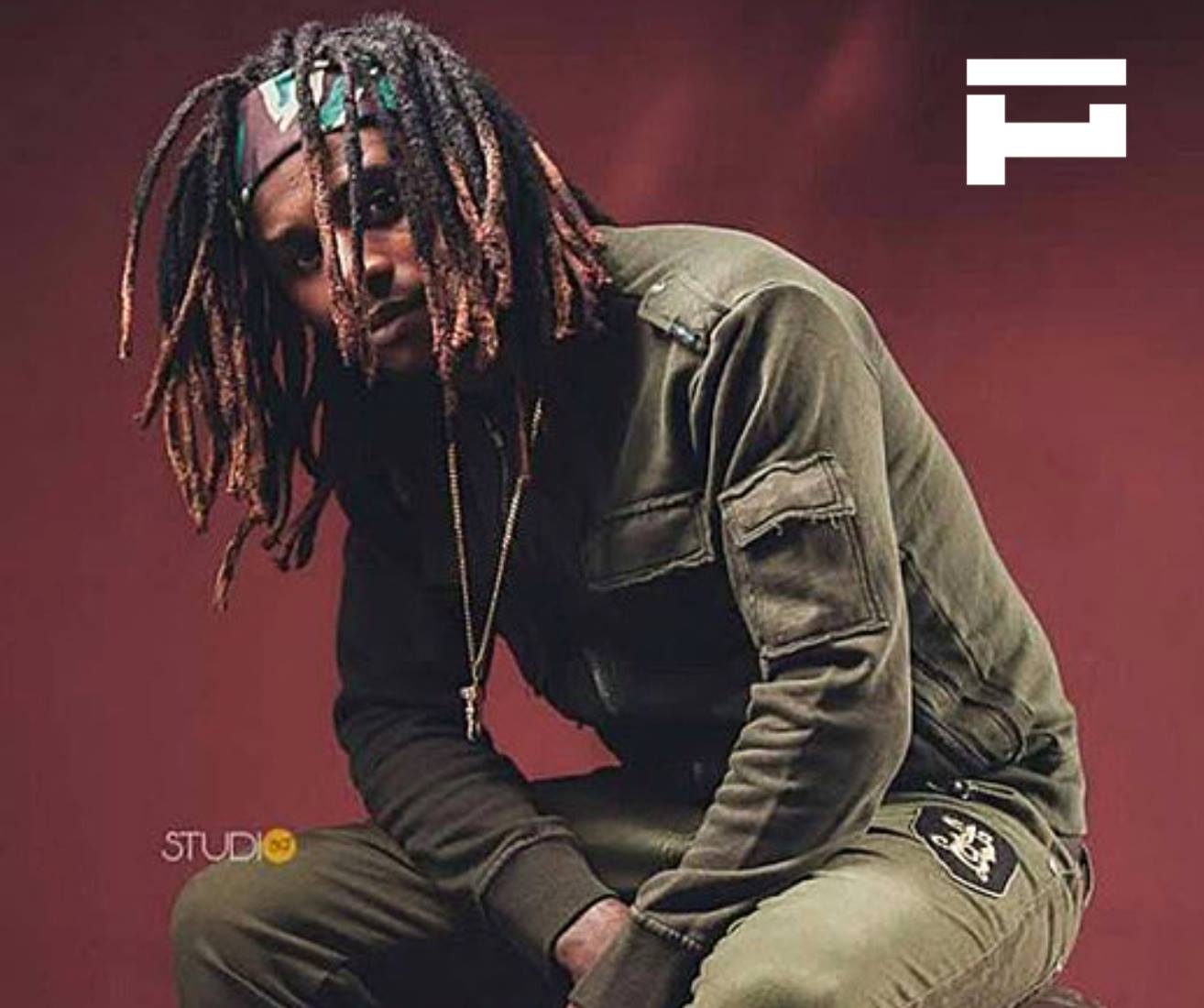
Anyway, fast-forward to March 9, 2018, I came across a new song by Awu entitled "Sidomina" shared by a friend on Facebook. As the music lover that I am, I didn't hesitate to click on it. My immediate reaction? — "Haaaaa is this or is this not the same Awu from 2016?" Hiaaaaa, let me first admit though: 2 years makes a big difference. I guess our Buea sleppas girl would confirm the swaggalicious essence emanating from the Awu I saw in that video. On top of the dressing, he's admittedly looking more handsome and he has grown out his locks and joined the Mr Leo and Ambe blonde-tinted hair gang.
Though at face value the song is a nice jam, I was caught off guard by a few things. Firstly, the sexual objectification of women in certain parts of the video. Problematic why? On a general level, it inadvertently reinforces misogynistic attitudes. On an Awu specific level, it represents a marked departure from his essence, his core — what I would say energizes his spirit. Some research revealed to me that Awu has long been captured by music, buying his first guitar as a young teenager motivated to use music to drive positive change. This passion is quite visible in Awu's prior discography, not so much in his latest single. Secondly, I was a bit perturbed by the pop-ish sound and vibe, not because the song was not good but because the soulfulness that has until recently been Awu’s signature is fizzling away. A reminder that identity of person and identity of place are pivotal when attempting to tether between popularity and purpose.
So why is Awu watering down his craft and what is he pandering to? With a voice as sublime and distinct as Awu's, I could have thoughtlessly watched the video and made no issue of it — rather, praised him like one of the only 4,000 viewers who lauded him as "The guy with the best voice in Cameroon." Quite simply, Awu is suffering from the misplaced priorities of a society. His plight as a musician, which is arguably what has led him to compromise on his authenticity is emblematic of what I started with — the elevation of image over product/content. It's emblematic of the useless pretense that would lead someone to drink garri for a month in order to purchase a 50,000 FCFA pair of shoes rather than first of all, eat well, and invest that 50,000 FCFA in a productive venture while walking around with 2-rope sleppas. Ma pipo...Dangotes are not built overnight. More pertinently, it is representative of our inclination to promote and sponsor packaged nonsense over real talent. So, as you finish reading this sentence ask yourself whether you even know who I've been talking about and whether you count yourself among the measly 4,000 viewers.
Asking myself a thousand questions as to Awu's sudden turn and his continued low visibility on the Cameroonian music scene (which he was clearly attempting to combat by venturing into this new type of music), I went in search of this guy on social media. Not surprisingly, he is barely present on social media. Not surprising because he comes across as so organic that he wouldn't be involved in the type of extensive marketing we have come to see from the likes of Stanley Enow. To my amazement, I stumbled across a Facebook live video he streamed 5 months ago, strumming his guitar and singing to a song presumably entitled "Going Back Home". If you know me, you would know my heart literally melted and I swear I could have cried. The uniqueness, the lyricism, the voice, the simplicity — I was captivated by Awu all over again. Awu possesses within him the power to achieve both popularity and purpose by generating new forms artistic expression that draw both from our deep musical roots as a country and a continent and the new musical currents. Who is to say he cannot become the voice that carries our stories and culture worldwide? A Salif Keïta, a Cesaria Evora, a Fela Kuti, a Brenda Fassie.
We have a choice to make as a people. As a society, we need to determine what our values are and act accordingly. As individuals, we need to learn to be purpose-driven, not fame-driven, money-driven, attention-driven, or image-driven. Money and fame (and might I add swag) will all come and more importantly, remain if you stay true to yourself. The resuscitation of our music industry has emboldened our youth and has given them something to aspire to in the midst of widespread disillusionment. It has also enlivened other arts, thereby creating a budding entertainment ecosystem. But we must recognize the power and responsibility that lies herein. As the carrier of culture, the voice of the people, and the courier of joy, the arts — music, fashion, dance, fine arts, film, etc. — has the potential to uplift our society and change our narrative. So, I ask the question: will we invest in and herald those with the talent and passion to not only tell our stories, but tell the right stories, or will we remain blinded by packaged nonsense?
The choice is ours. We either become an intentional and purpose-driven people or we continue to plunge deeper into our incongruities even as the dust of our ancestors tries to blow us in the direction of change.
- C.A.