
The commercial success of The Fisherman’s Diary made Kang Quintus a household name in the Cameroonian movie industry, quickly putting his name up on the marquee of who’s who in the budding neo-Cameroonian film industry, and carving him out as a talent to look out for. And so it wasn’t with too much effort that anticipation for his next movie, tentatively titled NGANU, was built.
The title of this new motion picture rather questionably ran parallel lines with the name of a famous person in the zeitgeist of our time, creating just the right amount of buzz to pique the interest of moviegoers and raise the eyebrows of skeptics.
That it was announced weeks after the other Ngannou won a world championship belt and that the release date was set barely two weeks after a famous fight in Saudi Arabia will leave the option to the people to decide if it was a great marketing ploy or a parasitic move to ride the coattails of another’s success.
However you choose to see it, the movie is here now.
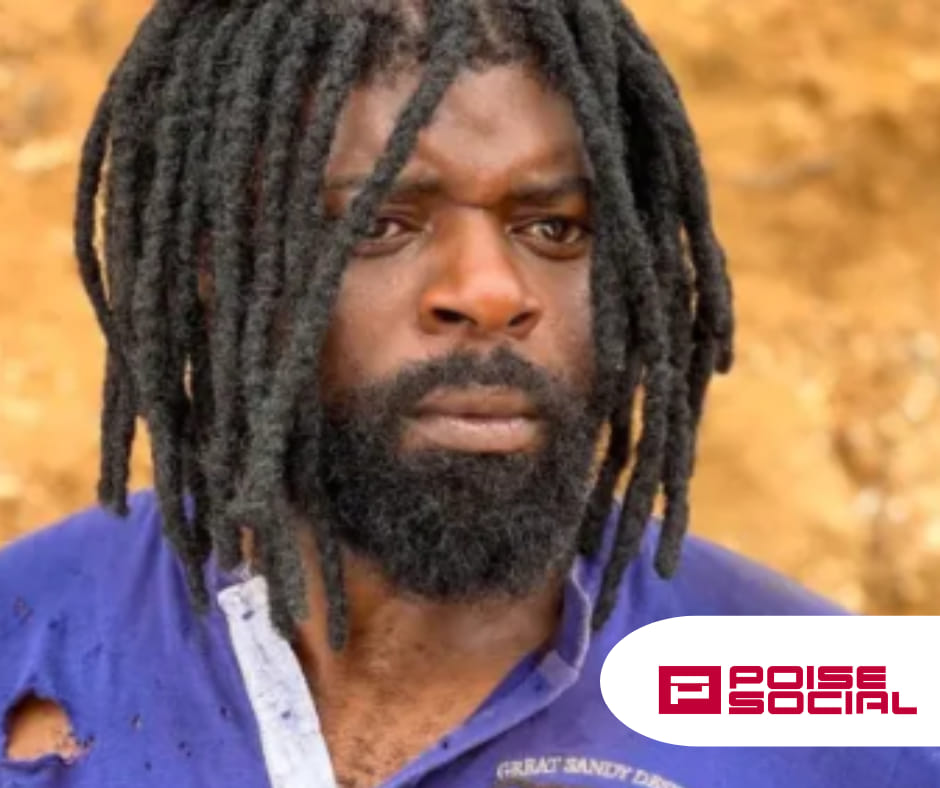
It is set in a small, rural village, against the lush backdrop of tall palm trees and long, brown footpaths cutting across the greenness of the man-made forest. The story follows Nganu, portrayed by Kang Quintus, a tortured individual branded with the stigmata of violence and caught in a twirling tornado of its vicious cycle. It doesn’t take long for the audience to come across this realisation:- as the opening scenes show him ruthlessly meting out blows after a domestic dispute.
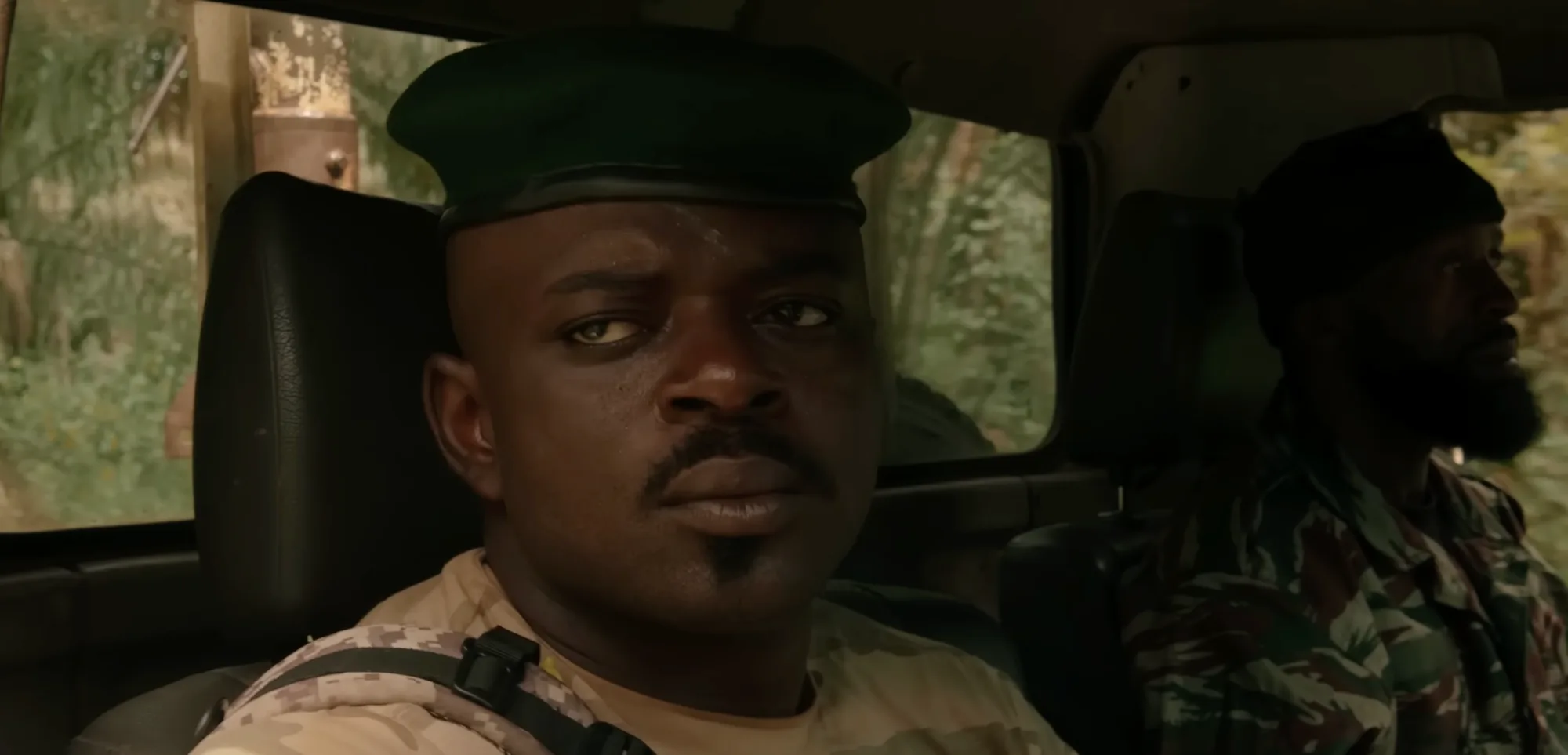
In a dramatic and unlikely twist of events, Nganu leaves his wife and son to join the army. He undergoes gruelling training and survives, coming out of it a changed person. In the third and final part of the movie, he returns home to face the shadows of the demons that he had left hovering, as he tries to reconcile with his wife and son.
Kang Quintus’ attempt at telling a story of redemption, though noble and idealistic, is lofty, and rather opaque, contrasting sharply with its ambition. The plot drags painfully over and over, with many long scenes void of any real artistic point-de-chute supplanting its plot holes.
The lack of meaningful dialogue to carry the story of Nganu’s internal battles is substituted with scenes of near-visceral violence, also too long and too recurrent – as if aware of its ineptitude at storytelling and thus having to needlessly remind the audience that this is this man dealing with this issue.
The narration itself has wide berths in how the story unfolds. There is no strong reason that shows why Nganu decides to join the army. No spark, no lightbulb moment, nothing that alludes strongly to who he is as person. There is just an announcement on the radio that asks people to enlist and fight Boko Haram. The movie itself fails to give a compelling backdrop as to why Nganu, a character well above 30 years of age with a teenage son is allowed to enlist. And he is not the only one. Every recruit is well above the age of enlistment.
And there is a deep plot hole as to why the character does not receive a psychiatric evaluation, a prerequisite for the military. Not to mention that his episodes of psychiatric breakdowns are met with astounded faces and questioning glances. If the country desperately needed all its ‘capable’ hands in a Mulan-style, and even to that extent, what was the reason?
The entire segment at the army barracks itself quickly severs what umbilical it had tied to the story as introduced. Clearly the aim was to use that to make a Saul-to-Paul-on-the-road-to-Damacus moment, but it fails to. And in what is a waste of the acting talent of Hakeem-Kai Kazeem, coupled with a chain of interactions that fail to show any tangible depth, the narration very lazily points out that this is Nganu’s redemption moment and he is now ready to face the world.
This narrative shortcut eats up a good chunk of the movie and delves insipidly into sub-storylines that are a pale caricature of An Officer and a Gentleman, where Nganu, the Richard Gere of this story, although having a potent internal strife, suffers at the hand of the story and the way its scripts itself. At the end of the day, the necessity of the military training subplot begs a big WHY?
The third part of the film which follows Nganu’s return to the village is the most interesting part, especially in how it reveals to the viewer how much of a more potent story it could have been if the entirety of it had been set in the village.
The final dialogue between Nganu and his son, a product of deus-ex-machina storytelling, is, ironically, the only redeeming part of the story. It is almost a shame that the story had to make an oxbow lake of itself to get to that estuary where it finally washes itself into a sea of an almost-worthy cinematic climax. The dialogue struggles but manages to stay on its feet, and stands well above the fray of what had so far been a poorly-tuned death march leading to a celebratory gun salute.
On the positive side, the soundtrack is good and should be able to find some good grace with the public. The director of photography did a rather good job and so did the location scout. Aside a few technical hiccups with sound, continuity, and fight scenes which definitely could have been better choreographed, from a technical point of view, Kang does well.
Some supporting cast were able to make a good bite of the storytelling morsel they had. Azah Melvin who played Nganu’s wife was able to visually convey the toll of a battered woman with the right hue of sadness in her eyes. Joseph Manti who played Pa Attah also was able to carry the few scenes he appeared in. Alenne Menget played what seems to be the same person for the umpteenth time – speech, accent and mannerisms in tow. Tiring, to say the least.
For the most part, the supporting cast, other than a few moments of unnecessary over-the-top theatrics from Ko-C and Blaise B, (more a symptom of poor writing than of their aptitude), did ok. Special mention to Nabil Fongod who otherwise was quite believable.
On the flipside, one would seriously question the presence and necessity of Cabrel Nanjip, to whom the film is dedicated. No doubt also symptomatic of our filmmakers who choose to use a star-studded cast as an end to a marketing means. Unfortunately, his character only makes the movie feel bloated.
Addressing a theme of deep-seated violence demands a more pronounced and focused approach that we have seen in movies like American History X, or even Precious. It demands heavy character development through back-and-forth timelines with strong dialogue to bring causes and motivations to light. It is no walk in the park, and despite his good intentions Kang doesn’t seem to have let his shoulders broaden themselves enough to give flight to such a story. Is it also the result of chasing movies with NGO-esque social turmoil storylines? One may beg to ponder.
Nganu, unfortunately, lacks the depth, maturity, screenplay, and narrative finesse to address its theme in a roundabout way that lets the viewer cut through to its focal points. The development feels rushed and the teeming deficiency in meaningful dialogues gives a dull and lacklustre glow to a motion picture which otherwise must have seen itself as a firework in the dark.