

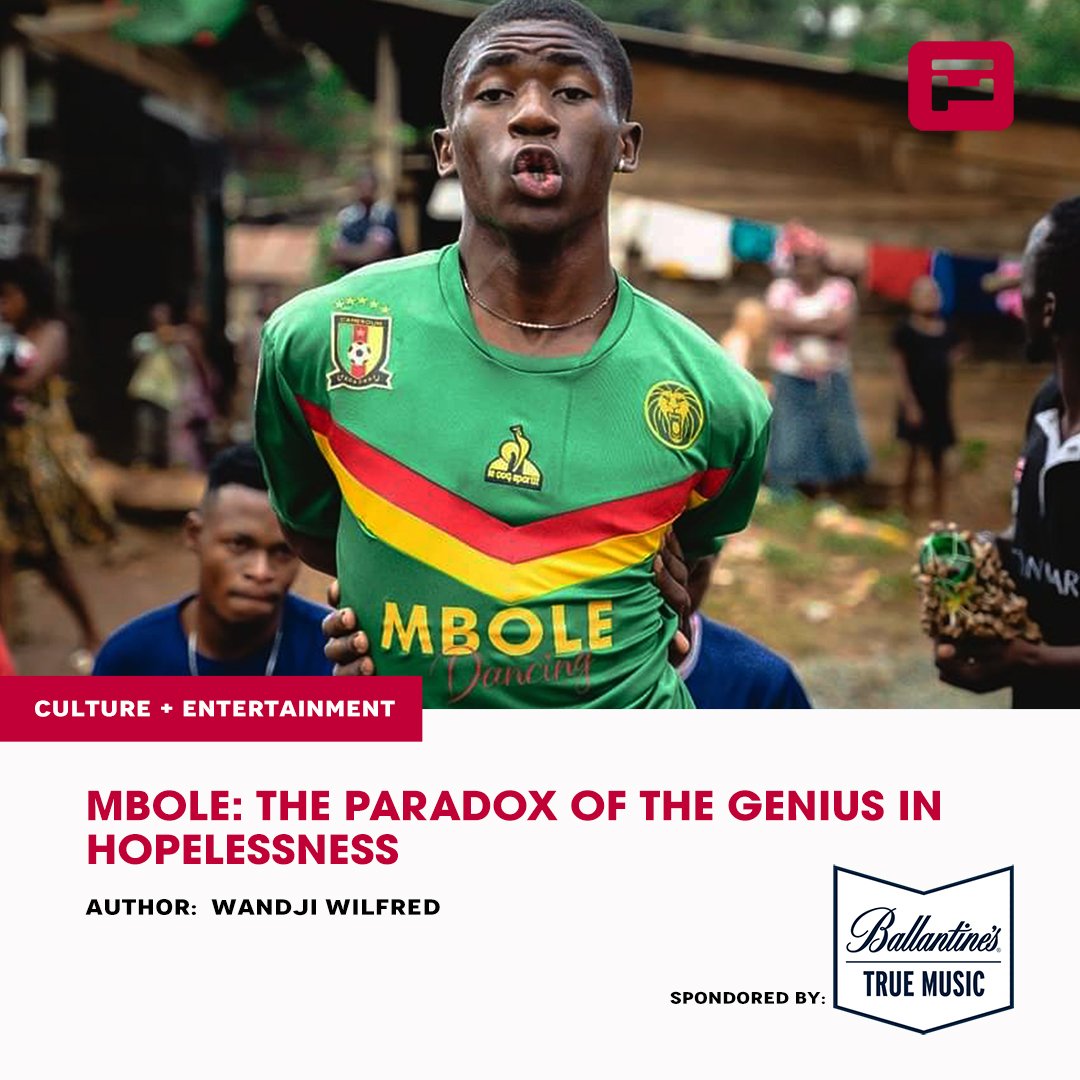
Mbole started in the Nkoldongo neighbourhood in Yaounde. The origins can be traced back to funeral celebrations in the poorer parts of this large neighbourhood, when young boys who wanted to bring some cheer to the sad and morose wake keeps would bang on plastic water drums and sing all night, entertaining those who had come to share in the grief of the bereaved.
These young boys, most of them in their late teens and early 20s would often get “paid” in kind at these wake keeps; a piece of bread with a cup of hot tea, a glass of beer, or boiled groundnuts with some sweet drink. Occasionally, they would be given some money by some entertained adult, appreciative of their effort and cognizant of their difficult situation. Many of them, after all, were victims of the many gaping holes that exist today in our social safety net.
The government and the local councils do almost nothing to keep young people’s minds away from idling by giving them amenities that could cater to their time - like cultural centers and other youth programmes that run after school and during the weekends. And the kids in these neighbourhoods have it worst, because at the end of the day depending on which part of town you are in, and what social strata you belong to, the gaping hole in the social safety net is either big or small.
But as fate would often have it, it pokes its face in the door with a whimsical smile and turns things around.
When you look at it closely, Mbole is not very far from rap music. The origin of rap is very well documented. Rap music is noted to have started on August 11th, 1973 in the recreation room of an apartment building in the Bronx neighbourhood in New York City. At a birthday party on this day, hip hop’s very first DJ looped a beat from a record that is credited to be rap’s very beat.
Mbole is not very different. Just like the Bronx, it started in a poor neighbourhood and the recreation centers and the parks where young people met to break dance to rap beats are the little Mbole arenas we have today in these neighbourhoods where children meet to play the djembe drum and dance to the rhythm of mbole.
Even in its thematic, Mbole music today runs parallel to the early days of rap. Love, unity, peace and staying away from drugs and crime are its essential elements. If you look at an early rap record like Grandmaster Flash’s “The Message” you see that it is the same message. Even early pioneers of Mbole lIke Aristide Mpacko and DJ Lexus are no different from Afrika Bambaataa and the Zulu Nation.
Genres like Mbole are born from the need to have an outlet to express frustration about inner despair. The creative chord is often struck in moments like this, and as history has repeatedly shown us, singing, dancing, writing and poetry are usually the most primal outlet we resort to when we feel a strong need to express these deep-seated emotions. That is why we sing the anthem at protest marches. We look to a symbol that should be the beacon for our frustrations.
It may have been a hustle for the first people who picked up a drum and decided to go to these wake keeps and sing, but subconsciously, it was also a means to put out the complexities of thought and the emotional turmoil that these teenagers and young adults were facing in their day to day lives. Their own beacon.
Growing up as a young man is hard and figuring out life and its numerous challenges both from within your own singular experiences and from the vagaries of society’s interactions with your own life is very tough.
That is why when the first Mbole artists went into the studio to make commercially-potent music, what they put into their lyrics was a reflection of where they come from, their experiences, the views that the world had about them and against them, and their utopic dream of what life could be.
It is certainly not militant right now, but nothing says that it will not be soon. A genre like this one certainly will branch out naturally and organically to incorporate many central themes and people who have necessarily not lived through the experience that gave birth to the genre will hop on it and bring their own sauce to it. This might create conflict with the purist of the genre but will only attest to its own potency and influence as an art form.
The danger here will be to romanticize this difficult beginning. Beautiful things do not necessarily have to be born from difficult and hopeless situations. Mbole has been around for over 10 years, but it is just over the last 2 years that the music has gone mainstream. And even in that regard, it is not fully mainstream as the etiquette of music of rascals and drug users is still very much attached to it.
But if we imagine that these had been living in an environment where they had a better safety net and had been given tools to help them with their skills and talent, it is very likely that the music would have evolved beyond what it is now and would have morphed into a more accepted and more mainstream genre. It would have probably exported itself also by now. But as things are we are condemned to the status quo. Our entire music industry is, by the way.
Genius does not necessarily have to be born from hopelessness
Wandji Wilfred
#BallantinesXmbole #TrueMusicSeries #StayTrue.