
Regulation
Law & Justice
The Jesus Girl Case: A Lesson in Due Diligence for Influencers and Investors
A TikToker known as Jesus Girl faced police custody over allegations of promoting a fraudulent financial services company that defrauded someone of 10 million XAF. The incident prompts a practical reminder about the importance of basic verification steps before endorsing or investing in any financial offer.

The Architecture of Cameroon's Judicial System
This post maps the formal structure of Cameroon's courts and legal personnel—from magistrates and registrars to judicial police, bailiffs, notaries, and lawyers—detailing their distinct roles and jurisdictions.

Five Cameroonian Laws Worth Understanding
The writer surveys five significant but underutilized laws in Cameroon's legal framework—covering abortion, underage marriage, arrest procedure, asset declaration, and tax exemption—explaining their actual scope and how citizens can invoke them. The piece treats law not as mere punishment but as a tool that civilians can deploy to protect their rights and interests.
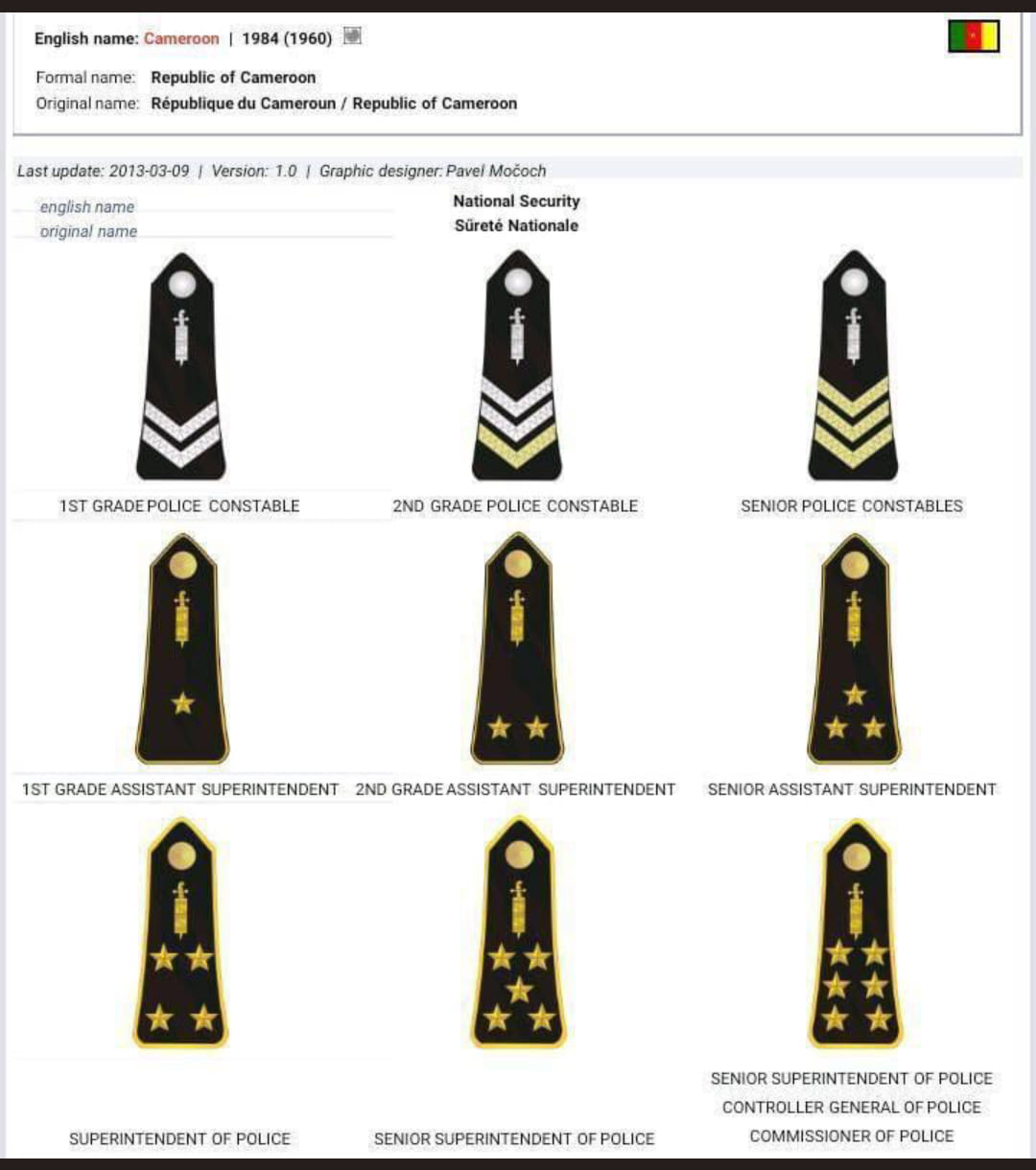
Know Your Police Force: Ranks and Required Qualifications in Cameroon
A straightforward guide to the hierarchical structure of the Cameroonian police force, detailing four main ranks subdivided into twelve total grades, each with corresponding shoulder insignia, and the educational qualifications required for entry at each level.

Francis Bebey's Song and the Copyright Question
The writer documents a case in which American rapper Theophilus London's song, featured in Netflix's *Ozark*, appears to draw from Cameroonian musician Francis Bebey's work—without permission or compensation to Bebey's estate. The post connects this incident to an earlier essay on the vulnerability of creative ideas in the absence of intellectual property protection.
The Absurdity of Redundant Certification in Cameroon
The writer describes the frustrating cycle of repeatedly certifying documents in Cameroon—birth certificates, ID cards, medical certificates—often for the same documents within days or weeks. Through personal anecdote, the piece exposes a system that wastes citizens' time and money while generating marginal government revenue, then proposes a centralized Document Certification Authority as a more rational alternative.

The Scammer's Brand: How Fraud Damages Cameroon's International Standing
The writer examines how Cameroonian nationals engaged in international financial fraud are reshaping global perceptions of Cameroonians abroad, creating systemic barriers for honest citizens trying to conduct legitimate financial transactions. The piece situates this criminal activity within larger histories of colonial extraction and contemporary economic desperation, while critiquing both the moral failures of individual scammers and the systemic inequalities that drive migration and crime.