

One year or so into the crisis, I wrote an article in which I gave some tips on how to survive and thrive in Cameroon. One of those tips was for people to learn how to speak French. Many people were not happy with that particular tip and tagged me a sellout or someone who had been assimilated. Outside of the context of Cameroon and the Anglophone crisis, we can all agree that learning to speak another language can never be a disadvantage.
I believe people have the right to fight for justice or stand against injustices. In my 3 decades on earth, I have also come to the realization that justice is usually gotten faster when the person seeking it has some sort of leverage. Everywhere in the world, we see discrimination. Everywhere in the world we see people who have risen to ranks where they get to see less of that discrimination. Even the most racist of individuals will, if they recognize him, treat Denzel Washington differently than they would treat another regular black man they run into.
I remember taking a sociology class being taught by a professor that all the blacks in school agreed was racist. When I took that course, I made sure I performed so well on the test that even her racism could not fail me. I am aware that the right thing here will be to try to remove the racist in that professor but that was not something I could control. As a black man in America, for example, you might have to avoid a certain type of dressing in a certain type of situation in order not to become a victim of Police brutality. Ideally, you won’t want to be judged by your attire or your skin color but the reality is you will.
Everyday, we anglophones are fighting for representation in various things national. Marginalization is real and our complaints are valid. BUT, I believe if we understand that we are going up against people who are not ignorant of the reality, we must employ a different approach.
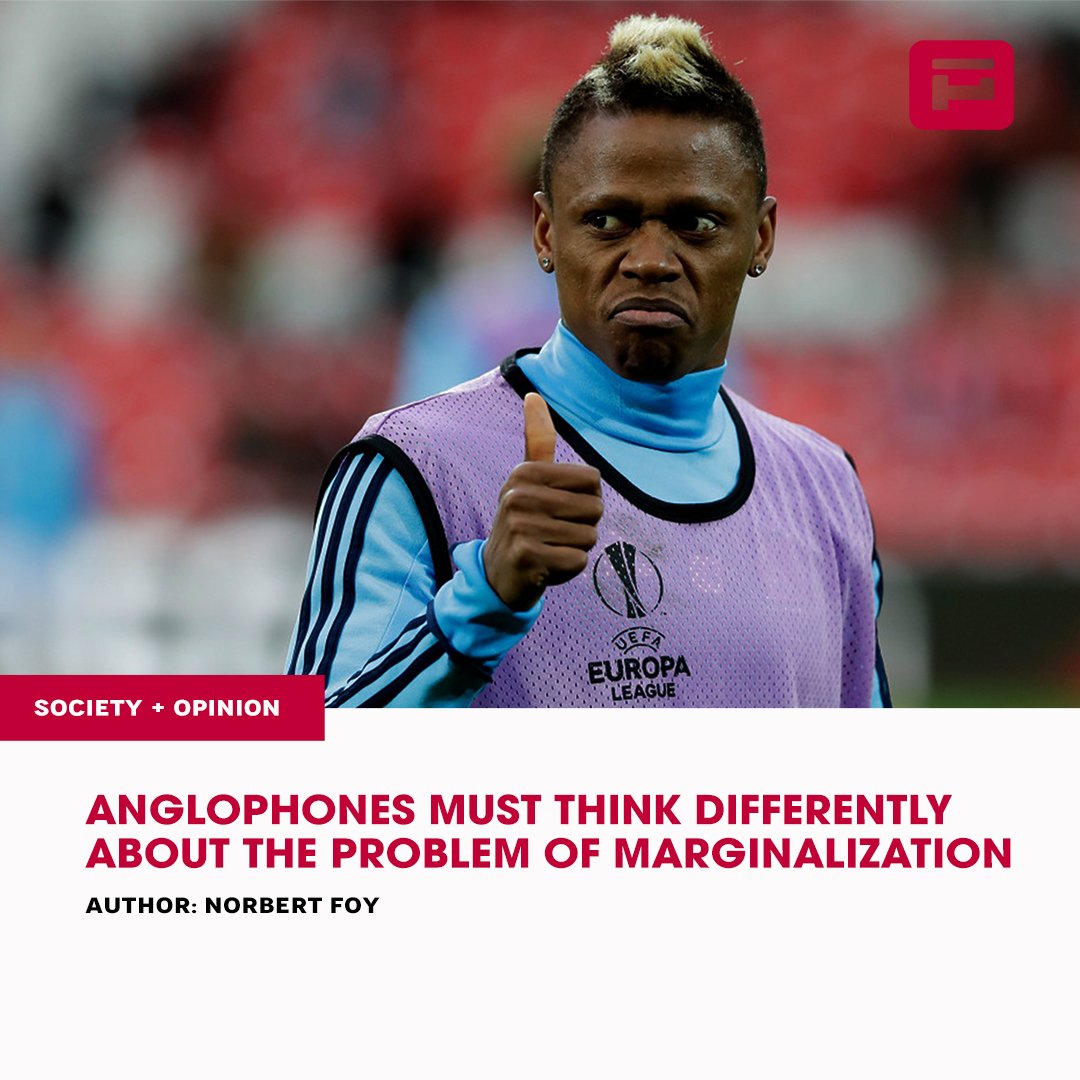
Sir Agbor Gilbert is one of those who have been very vocal about the plight of the anglophone in Cameroon. He wrote recently about the absence of Anglophones in the National football team and in the FECAFOOT in general. With Eto’o at the helm of FECAFOOT, doing everything to portray himself as a different kind of leader, one would have expected that he would take inclusion of anglophones seriously but apparently he is not. I would like to talk about his stance on the issue of marginalization but all will be speculation.
I’d rather talk to you about my Water Theory. The theory is simple, water will always find its way, no matter how long it takes. My philosophy is that to fight marginalization, we have to become so good that we cannot be conveniently ignored. Yes we would love to have anglophones in the national team. If they asked you to send a short list of Anglophone players you believe should be on the team, many of us won’t have a name to call. We have teams like YOSA, PWD Bamenda, and Victoria United. What if we invest in these teams and bring so much fanfare around them that even the francophones will notice them? What if we invest in these teams and develop players with unquestionable talent?
I see many small privately owned health centers. What if we invested in those so much that when someone is sick in Yaounde, they have to come to Bamenda or even to Wum for treatment because the hospitals there are known for the best healthcare?
We have private schools. I remember Sacred Heart College which I attended being flooded by francophones. The same people that will insult you “les Bamenda” in Yaounde will be proud of their son getting a solid education in the same Bamenda. Our teachers were one of the first to come out to strike and we all know what happened. What if our private institutions were so good that even teachers that graduated from ENS were happy to leave their government job and work in the private sector for a better salary?
Nobody is marginalizing Nkeng Stephen or Adah Akenji. In fact, many francophone artists wish they had the money to pay Nkeng or Adah. Trust me that, faced with two video directors of equal skill level, a francophone will work with a francophone, and an anglophone will work with an anglophone. But when there is a difference in the quality of the work, people will chose to go for the best product.
I don’t see anyone who refused to buy great furniture because it was done by an anglophone.
I believe our problem is that we are only fighting for those positions where we ourselves don’t have to prove to be competent. The government jobs I mean. There are many places where the government cannot stop us. If we do excel in those places, they won’t see us coming. Before they know it, they’ll realize they can steal all they want but they will bring that money back to us to pay for our services.
Craft is the ultimate liberator.
I’m not saying it is an easy task. BUT. That is why we must start now.