
Relationships
Lifestyle
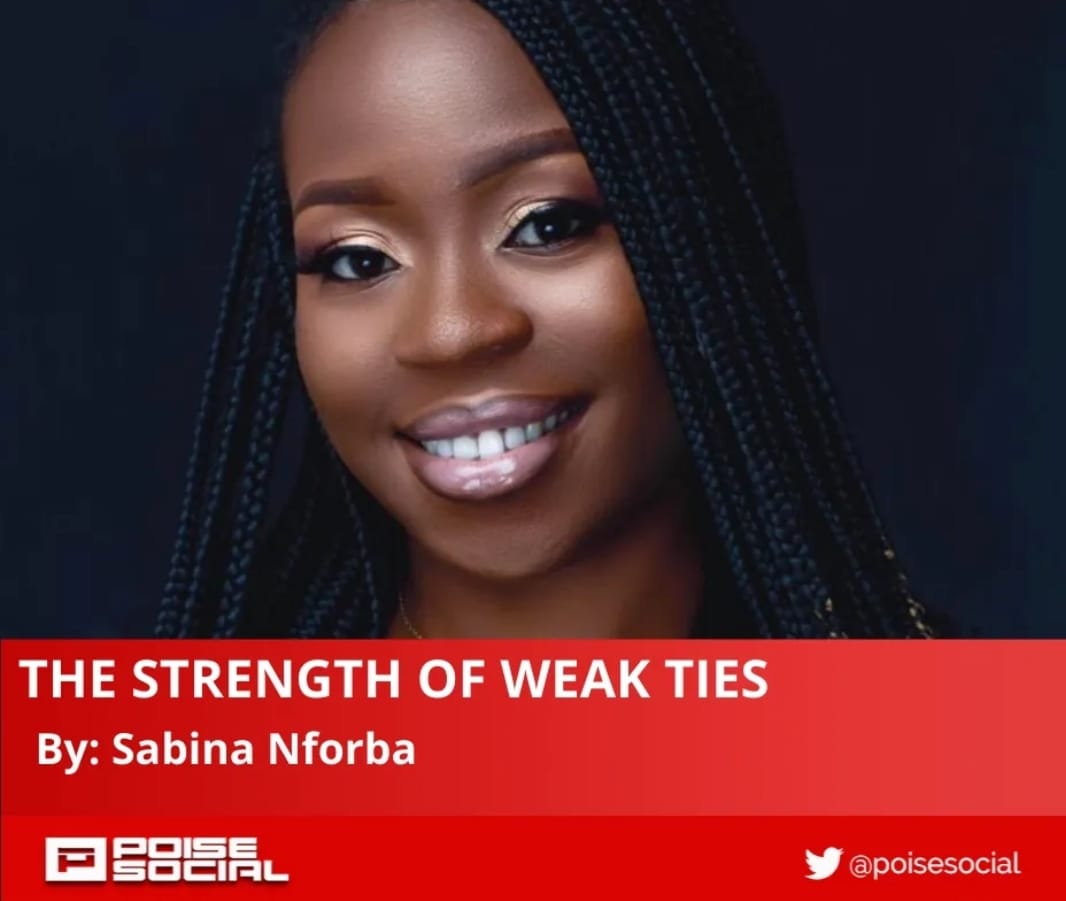
The Strength of Weak Ties: Why Acquaintances Matter More Than We Admit
This essay challenges the popular cultural tendency to cultivate only a tight circle of close friends, arguing instead that weak ties—acquaintances, distant former colleagues, and casual connections—are far more valuable for personal growth and opportunity. Drawing on sociological observation and lived experience, the writer shows how weak ties serve as bridges to new information, networks, and ideas that strong ties cannot provide.
A Letter to Cameroonian and African Men
A young woman confronts the contradiction between the idealized image of the African man as protector and the reality of contemporary masculinity she observes—one that reduces women to wife-material categories, demands their submission, and offers no reciprocal regard for their wellbeing or autonomy.
The Strength of Weak Ties: Why Acquaintances Often Matter More Than Close Friends
This essay challenges the cultural valorization of tight-knit friend groups by examining the sociological concept of weak ties—casual relationships with acquaintances, former colleagues, and distant connections—and argues that these overlooked relationships are often more valuable for career advancement, opportunity access, and personal growth than the strong ties we tend to prioritize.
Multi-Dating as Honest Negotiation: Rethinking Modern Romance
The writer proposes open multi-dating—simultaneously dating multiple partners with full consent and transparency—as a corrective to the serial heartbreak, infidelity, and deception that characterizes many modern relationships. Rather than a justification for promiscuity, the argument frames it as a deliberate audition process for finding genuine compatibility, grounded in radical honesty about intentions and desires.
The Crossroad of Expectation: On Marriage, Nostalgia, and the Millennial Woman
A reflection on the generational collision reshaping marriage and partnership in Cameroon, where millennial women—educated, independent, and career-driven—encounter men shaped by nostalgic visions of their mothers' domestic roles. The piece asks whether the 90s generation can adapt to new relational possibilities or will remain trapped between incompatible ideals.
Jessyka Fon and the Illusion of Luxury
A reflection on a Cameroonian actress's refreshingly honest social media post about her red-carpet look, in which she disclosed the modest costs and thrifted sources of her outfit. The piece celebrates her candor as a quiet act of resistance against the pressure to perform wealth and exclusivity online.
Am I My Sister's Keeper? On Doubt, Desire, and the Cost of Success
A reflective essay prompted by an overheard remark about a young woman's expensive car. The writer examines why Cameroonian society—particularly women—so readily attributes a young woman's visible success to sexual favor rather than her own effort, and asks whether this reflex is rooted in observable reality or in deeper anxieties about gender and economic power.
Choosing Your Battles: A Lesson in Protecting Your Vital Space
A motorcycle fare dispute in Yaoundé becomes the occasion for reflection on when to engage conflict and when to let it pass. The writer argues that preserving one's energy and peace of mind is more valuable than winning every small disagreement, even when principle seems at stake.

The Millennial Marriage Crossroads: Women's Independence and the Male Reckoning
A Cameroonian writer traces how the 90s generation—nostalgic for their parents' world of clear gender roles—now faces a different reality: women who are economically independent, professionally powerful, and unwilling to be silent partners. The piece argues that men must evolve to match the social transformation already underway, or millennial marriage will remain a site of friction rather than complementarity.

The Millennial Marriage Paradox: Women's Evolution and Men's Nostalgia
The writer examines the generational collision between millennial women who have built independent careers and lives, and millennial men shaped by nostalgia for their mothers' domestic role. She argues that both genders have adapted to technological and social change, yet struggle to reimagine partnership when economic and professional realities demand new definitions of marriage and complementarity.

Why Rich People Don't Have Poor Friends
A meditation on the fracture of friendship across economic lines, told through the story of two colleagues whose bond survives career loss but fractures upon recovery. The piece examines how proximity to wealth reshapes loyalty, and how the friend who offered shelter during hardship becomes invisible once circumstances improve.
Online Etiquette: Intention and Research in Social Connection
The writer argues that social media friendship should be purposeful rather than reflexive, and that meaningful connection requires basic research, clear intent, and respect for others' time. Vague greetings and idle openers are a form of disrespect that signals the sender hasn't done the work to know who they're approaching.