
Labor & Wages
Economy & Finance
Beyond the Ten Careers: A Taxonomy of Work in Contemporary Africa
The post maps five economic sectors—primary (extraction), secondary (manufacturing), tertiary (services), quaternary (knowledge), and quinary (leadership)—as a framework for understanding the breadth of professional possibility available to African millennials and Gen Z. It grounds each sector in African realities and current global demand, offering concrete career pathways where the traditional gatekeeping of visibility and vocabulary no longer applies.
A Job Search Strategy for the Average Cameroonian
The post argues that in Cameroon, where most vacancies remain unposted and hiring flows through networks, effective job seeking demands strategic research rather than mass applications. By studying company structures on LinkedIn, identifying weak ties, and targeting growing firms over established giants, a job seeker can shift from blind hope to deliberate positioning.

Innovation Without Direction: Why Cameroon's Tech Hubs Miss the Mark
Cameroon's innovation hubs generate abundant ideas but lack strategic coherence, often recycling global tech trends rather than solving local problems. The writer observes that while hubs celebrate startup pitches on digital health and fintech, real economic challenges—like formalizing the informal transport sector—are being solved by imported solutions, suggesting a fundamental misalignment between innovation infrastructure and national needs.

The Price of Invisible Work: On Valuing Creative Services in Cameroon
A reflection on the persistent difficulty of pricing creative and content work in Cameroon, where efficiency is often punished and the boundary between time spent and value delivered remains fundamentally misunderstood. The writer argues that creative pricing should rest on the client's actual benefit and the creator's opportunity cost—not on hours logged or speed of delivery.

The 40,000 FCFA Salary: Value, Growth, and Mutual Obligation
A meditation on low-wage employment in Cameroon that resists easy blame, examining the tension between business sustainability and worker dignity. The writer argues that both employers and employees bear responsibility for understanding the real value being exchanged, and that clarity and environment matter as much as the paycheck itself.
No Emotion: On Artist Pay, Corporate Logic, and Labor Power in Cameroon
The writer argues that outrage over low artist payments misdiagnoses the problem: corporations have no obligation to fund culture, artists lack collective bargaining power, and the real issue is structural inequality between local and international business partners. The solution is not better corporate charity but organized labor and ownership by artists themselves.
Seven Skills for Financial Independence in Cameroon
The writer surveys seven technical and creative trades—graphic design, video editing, community management, content creation, web development, photography, and sound engineering—as viable paths to financial self-sufficiency in Cameroon. Each field is assessed for demand, scalability, and earning potential, with frank notes on barriers to entry and market gaps.
The Age of the Side Hustle
The writer examines how generational shifts and digital culture have reframed our relationship to work and passion. Rather than chasing a single passion as an end in itself, the sustainable path forward—especially in Africa—is to maintain a reliable income source (the hustle) while exploring creative expression on one's own terms.
The Okada Man and the Cost of Credentials
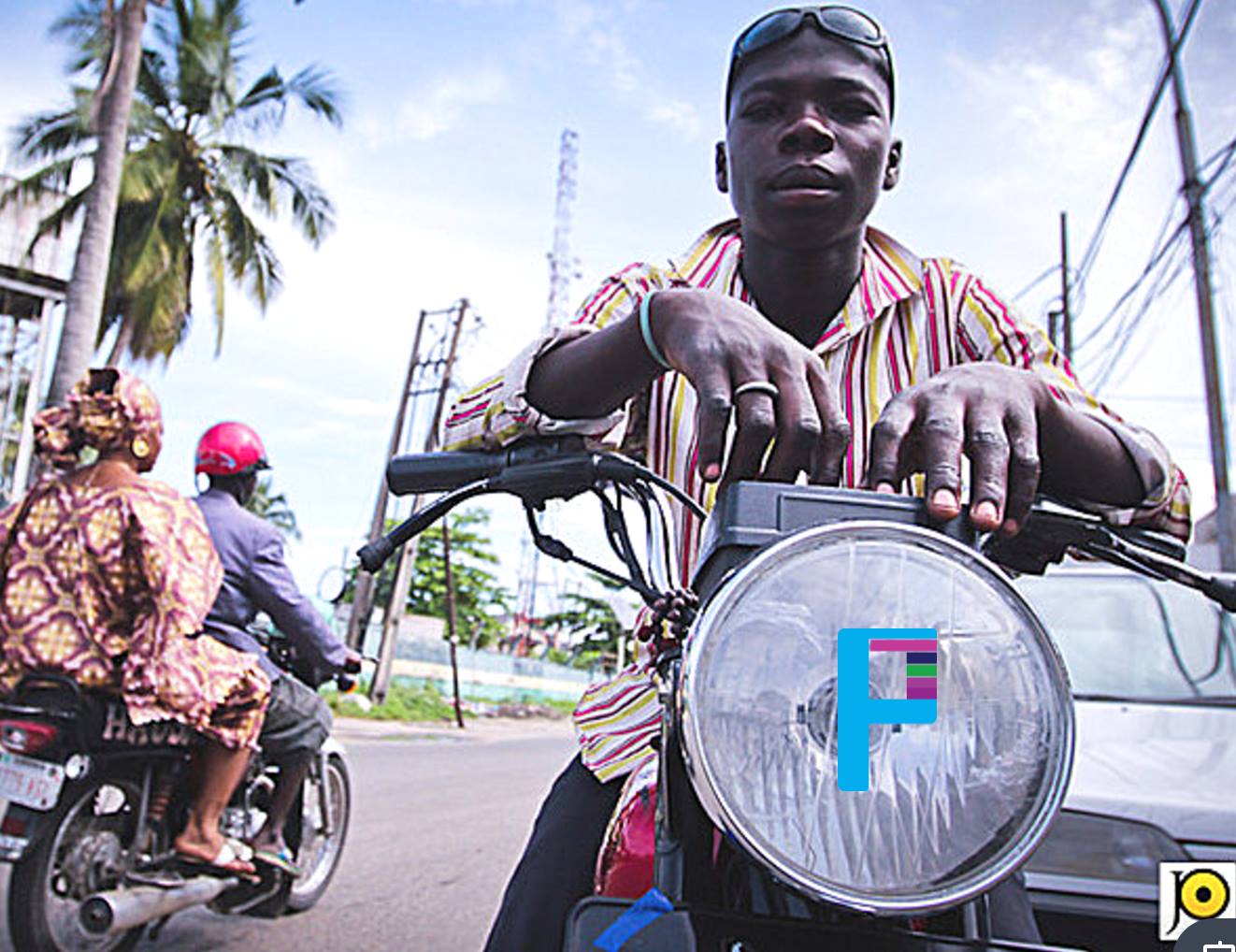
A reflection on the okada (motorcycle taxi) driver as economic actor and social mirror in Cameroon, examining how educational prestige and cultural stigma trap graduates in false scarcity while ordinary riders build capital through honest work. The writer questions whether formal education, despite its cost and promise, has actually narrowed rather than widened the range of viable lives.